Updated October 2026: this post was first published in February 2018 to announce the analysis. We have expanded it with a summary drawn from the analysis’s executive summary.
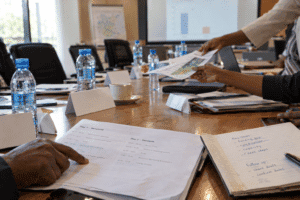
Some refugees have lived in Ethiopia for more than 20 years, most of them in camps. In 2017 we commissioned Samuel Hall to assess how far those long-staying refugees in the Gambella and Somali regions are on a path to local integration, and what policy and programming would help. Fieldwork ran from June to August 2017 in Jigjiga and Kebribeyah camp in the Somali region, and in Gambella town and Pugnido camp in Gambella. It combined a literature review, interviews with government, donors, UN agencies, NGOs and academics, focus group discussions with refugees in protracted displacement and with host communities, and workshops with NGOs and civil society. The analysis uses the ReDSS Solutions Framework, organised around physical, material and legal safety, and was designed as a baseline rather than for projections.
Why local integration was on the table
At the time of the study Ethiopia hosted more than 890,000 refugees from some 20 countries, mainly South Sudan, Somalia, Eritrea and Sudan, and more than 100,000 new refugees had arrived since the start of 2017. On 19 September 2016, UN Member States adopted the New York Declaration, which led to the Comprehensive Refugee Response Framework (CRRF). The next day, at a Leaders’ Summit that Ethiopia co-hosted, the government made nine pledges, setting out a move away from camp-based care and maintenance towards self-reliance, mobility within the country, and the inclusion of refugees in development. Pledge 6 concerns local integration, and in February 2017 Ethiopia agreed to roll out the CRRF.
Physical safety
The study documents tensions between refugees and hosts, rooted in competition over resources and long-standing ethnic and clan divisions; in Gambella these play out between Anuak and Nuer communities. In the Somali region, refugees, especially women in camps, report discrimination and violence with little access to justice, even though intermarriage between refugees and hosts is common. Refugees can leave camps with a permit from the Administration for Refugee and Returnee Affairs (ARRA), but access varies: refugees in Kebribeyah faced tighter limits on movement than South Sudanese refugees in Pugnido.
Material and legal safety
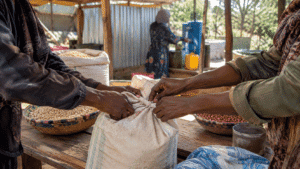
Food, water, education and health services are largely shared between camps and surrounding host areas, though some hosts believe refugees are better served because of international support. Refugees are not part of the Productive Safety Net Programme, and at the time they were not allowed to work. They took part in the economy anyway, through incentive work, selling rations, small businesses, informal trade and informal arrangements with employers. Housing standards were low for both groups, and because the state owns all land, access to land was limited.
On legal safety, refugees can seek justice through an ARRA-led referral system in camps and through refugee committees, usually after trying traditional mechanisms first. The main concern is the quality of these services, particularly for women and minorities. A 2009 law restricted civil society work on conflict resolution and justice unless organisations raised at least 90 percent of their funding domestically. One positive change was that refugees could now request birth certificates through the national vital events registration system.
Barriers and openings
The barriers were restricted access to land and markets, limited connection to the wider country because of movement restrictions, legal limits on work, documents and land tenure, and customary rules that disadvantage women and minorities. The study warns of a lost generation if children and youth are failed. The openings were the nine pledges, which created room for economic integration as a route to social cohesion, alongside Ethiopia’s CRRF commitments and the Sustainable Development Goals.
What we recommended
The recommendations cover four areas. On coordination: bring displacement and local integration into national and local development plans, including the Productive Safety Net Programme provided Ethiopian beneficiaries are not reduced, strengthen the CRRF secretariat, and improve data sharing. On capacity: build the capacity of civil society and line ministries and support community-led models such as the Community Demand Driven approach used in the Development Response to Displacement Impacts Project. On inclusion: involve refugees and hosts in planning and monitoring, link refugees to local value chains, lift restrictions on work permits, recognise refugee qualifications, and consider mobile courts. On learning: improve longitudinal data and use the ReDSS framework as a regular progress report card.
Ethiopia passed a new Refugees Proclamation in February 2019. Our 2020 research synthesis, Towards a common research agenda in Ethiopia, looks at the evidence that followed.
Read the full report, the executive summary and the summary presentation.
References
Samuel Hall for ReDSS (2018). Local integration focus: refugees in Ethiopia. Executive summary. Regional Durable Solutions Secretariat. https://www.regionaldss.org/wp-content/uploads/2018/02/SH-REDSS-ETHIOPIA-EXECUTIVE-SUMMARY.pdf