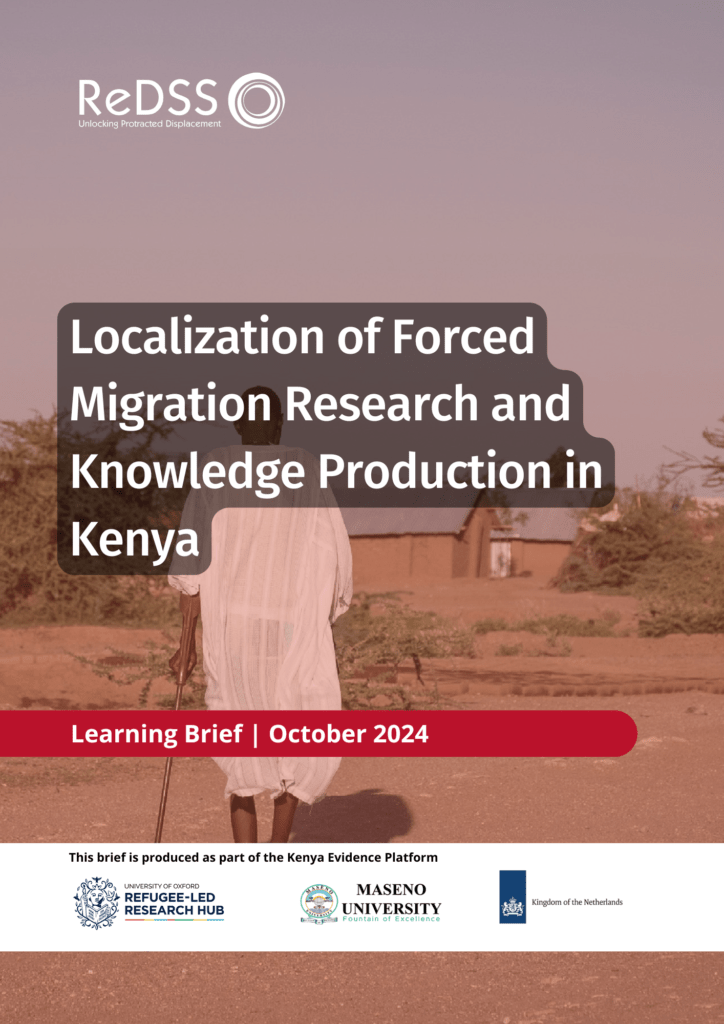
The brief examines how Kenya’s evolving refugee policy environment creates an opportunity to strengthen refugee‑led research as a core component of evidence‑based decision‑making. It argues that despite progressive reforms such as the Refugee Act and the Shirika Plan, research on displacement has historically been dominated by external actors, leading to limited contextual accuracy and weak ownership. Refugee‑led research addresses this gap by improving data quality, enhancing trust, and increasing policy legitimacy. The brief showcases the Refugee‑Led Research Hub and the Kenya Evidence Platform as leading initiatives that equip refugee researchers with skills through training, mentorship, independent research funding, and institutional partnerships. These programs have supported more than 500 learners and produced dozens of independent research papers that reflect lived experiences of displacement.
The document also identifies barriers such as short-term funding, unequal participation across nationalities, low virtual learning engagement, diverse skill levels, and structural power imbalances in research partnerships. Lessons learned emphasize the need for equitable collaborations, strong institutional linkages, participatory methods, and blended learning formats. Recommendations include integrating refugee-generated evidence into national frameworks, creating dedicated funding streams, investing in research infrastructure in refugee-hosting counties, promoting ethical research practices, strengthening research-to-policy pathways, and fostering regional learning networks. Overall, the brief underscores that refugees should be recognized not just as research subjects but as co-creators of knowledge who can meaningfully shape Kenya’s refugee governance landscape.