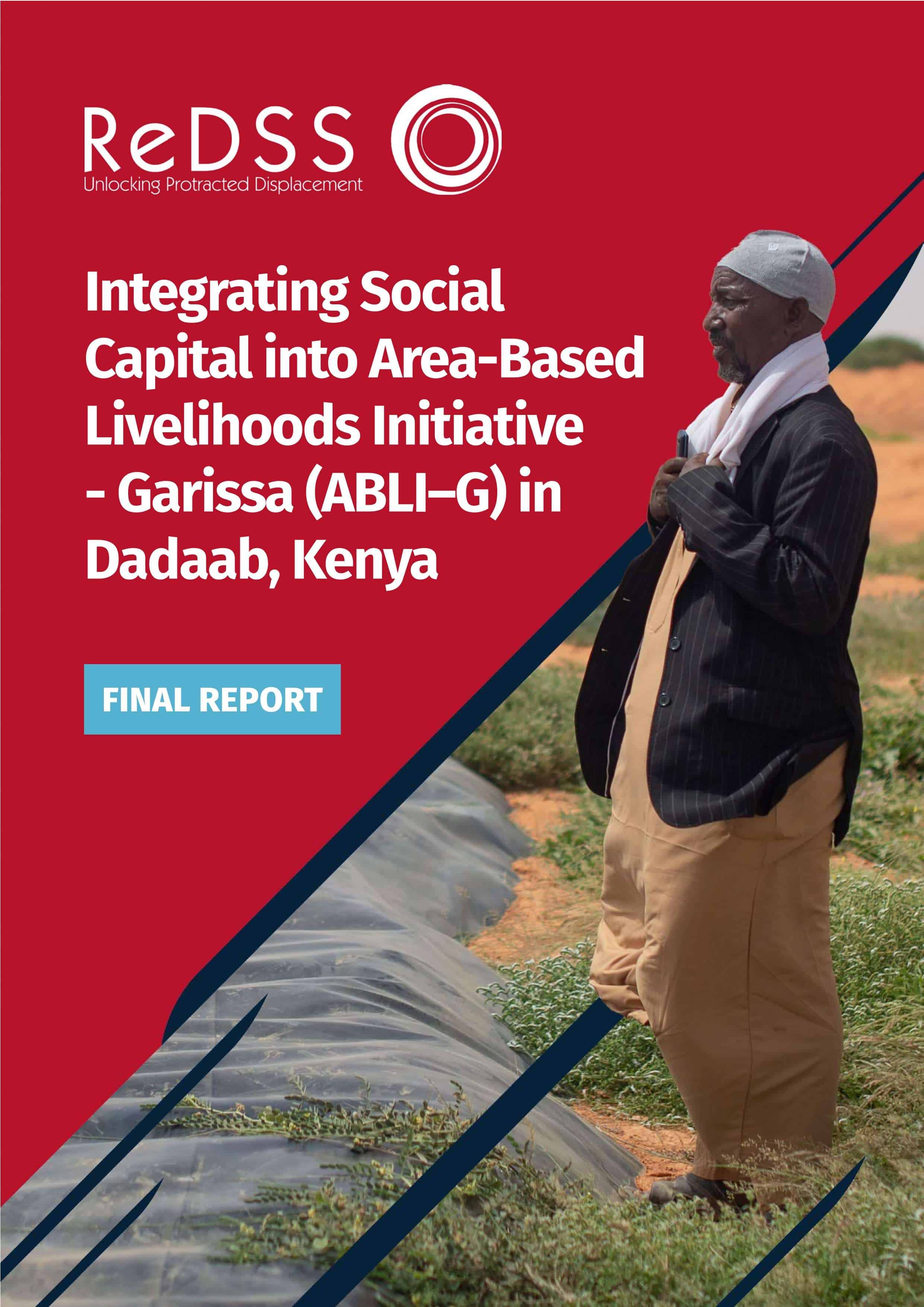
This report analyzes the integration of social capital within the Area-Based Livelihoods Initiative – Garissa Phase II (ABLI‑G II), focusing on how social networks influence access to livelihood opportunities among refugee and host communities in Dadaab. The assessment demonstrates that social capital – defined as bonding, bridging, and linking connections – is a critical foundation for achieving self-reliance. Quantitative evidence reveals a statistically significant positive correlation (r ≈ 0.331) between self-reliance and social capital, with host communities consistently scoring higher in both domains.
Vulnerable groups, especially women and households with persons with disabilities, possess relatively high bonding and bridging capital, using community networks to mitigate risk. However, they remain disadvantaged in linking capital due to limited education, restricted mobility, and language barriers, creating challenges in interacting with institutions and accessing formal assistance.
Beneficiary selection for ABLI‑G II unintentionally favoured individuals with stronger social capital – those with English proficiency, digital access, higher education, and greater institutional contact. This dynamic reinforced existing inequalities, while informal gatekeepers and clan-linked networks further shaped programme access. Outreach channels such as WhatsApp groups, community leaders, and digital platforms disproportionately benefited individuals who were already well-connected.
The report recommends intentional strategies to reduce exclusion, including diversified outreach, personalised application support, gender-responsive programming, and the development of a Social Capital Index. Strengthening bridging and linking capital – through peer‑to‑peer pairing, improved communication channels, and flexible funding – will enable ABLI‑G II and future humanitarian programmes to reach individuals with low social capital more equitably and effectively.