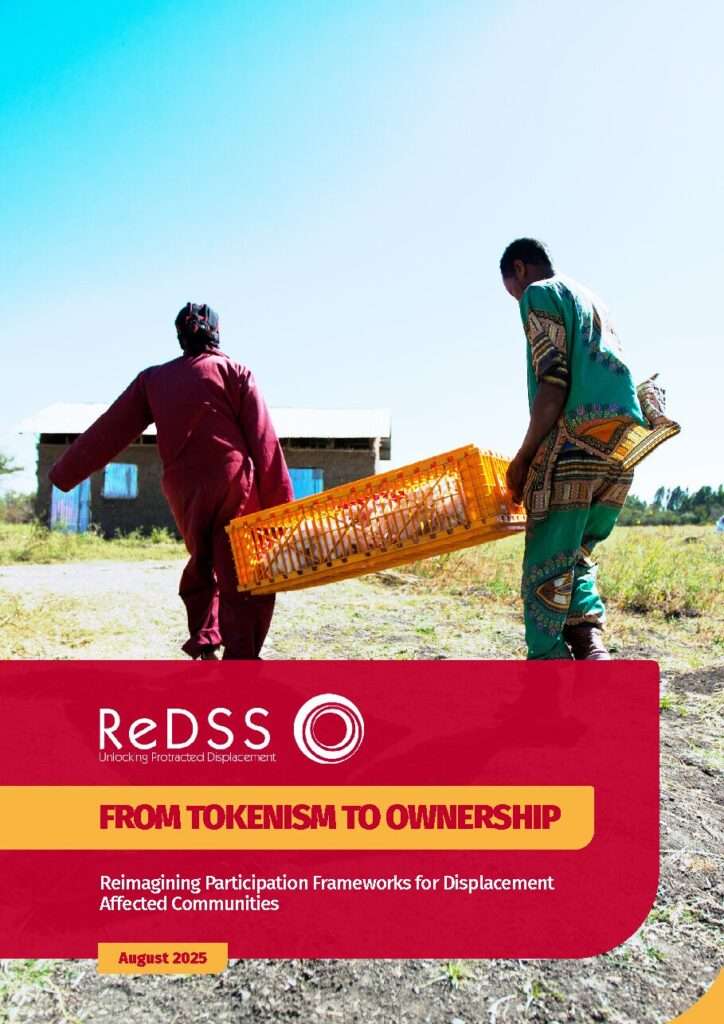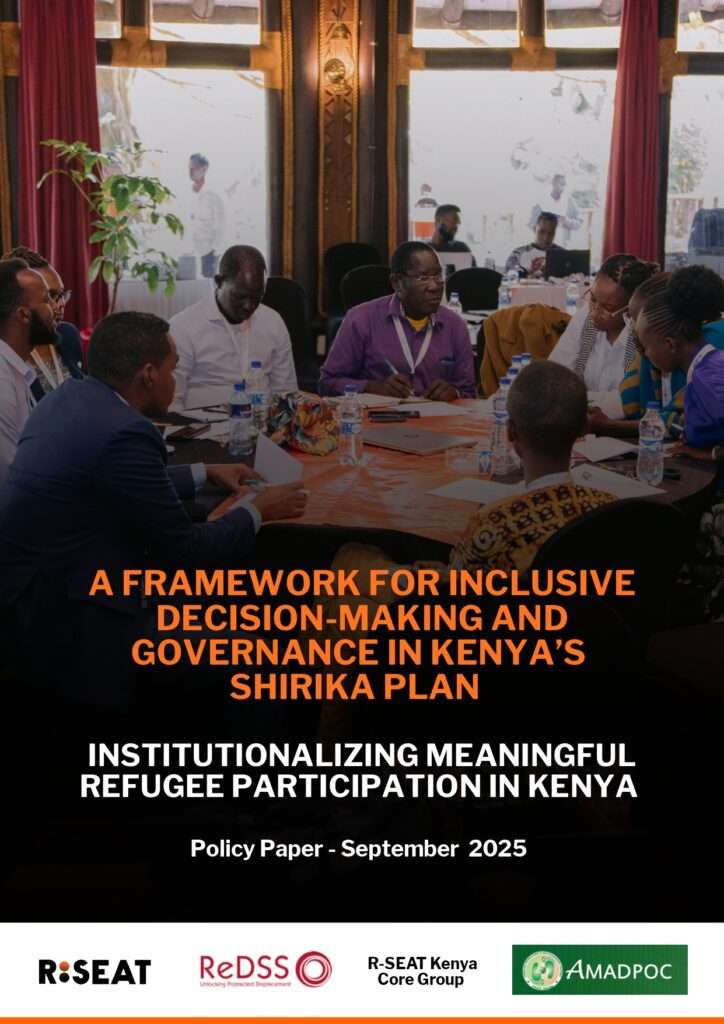
This policy brief explores how Kenya’s public participation framework functions in practice for refugee communities and identifies gaps between constitutional intent and actual implementation. Although Kenya’s 2010 Constitution, national legislation and court rulings affirm that public participation is a right belonging to all residents, refugees remain largely excluded from county policy processes. The brief reviews relevant legal foundations, including the County Government Act, Public Finance Management Act, Refugee Act 2021, and international instruments. It notes that while these frameworks provide strong justification for refugee engagement, county-level mechanisms have not consistently operationalized them.
Using Turkana County as an illustrative example, the brief outlines the provisions of the Turkana County Public Participation Act, which defines “the public” broadly enough to include refugees. It highlights three participation tools: the Public Participation Plan, Directorate of Public Participation, and sub‑county and village forums. Despite these mechanisms, refugees report limited participation due to short‑notice forums, lack of information, resource constraints, and uncertainty among officials about obligations to include non-citizens.
A positive development occurred in October 2025, when the County Assembly amended its Standing Orders to recognize refugees as petitioners and include refugee participation in the mandate of the Committee on Justice, Human Rights, Legal and Refugee Affairs.
The brief proposes four recommendations: institutional capacity building, targeted funding for inclusion, strategic partnerships with UN agencies and RLOs, and improved community sensitization. It concludes that refugee participation should be framed as part of Kenya’s broader push for accountable, inclusive governance rather than a separate agenda.