
In Amhara, the architecture for durable solutions already exists: a regional strategy, a costed action plan, a working group to coordinate it, and an emergency preparedness plan with named priority areas. What the region does not have is the funding or the coordination to make that architecture work. The Amhara Regional State Disaster and Risk Management Commission (ARS DRMC) has budgeted 39,688,958,665 ETB for its emergency response plan; roughly 3 billion ETB has actually been made available.
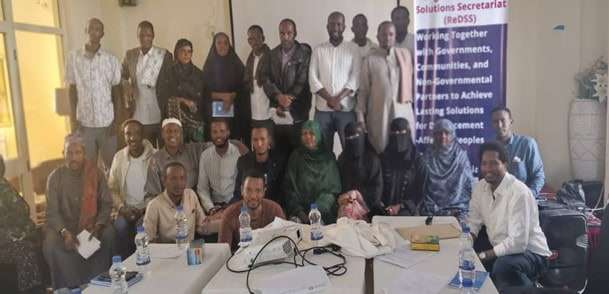
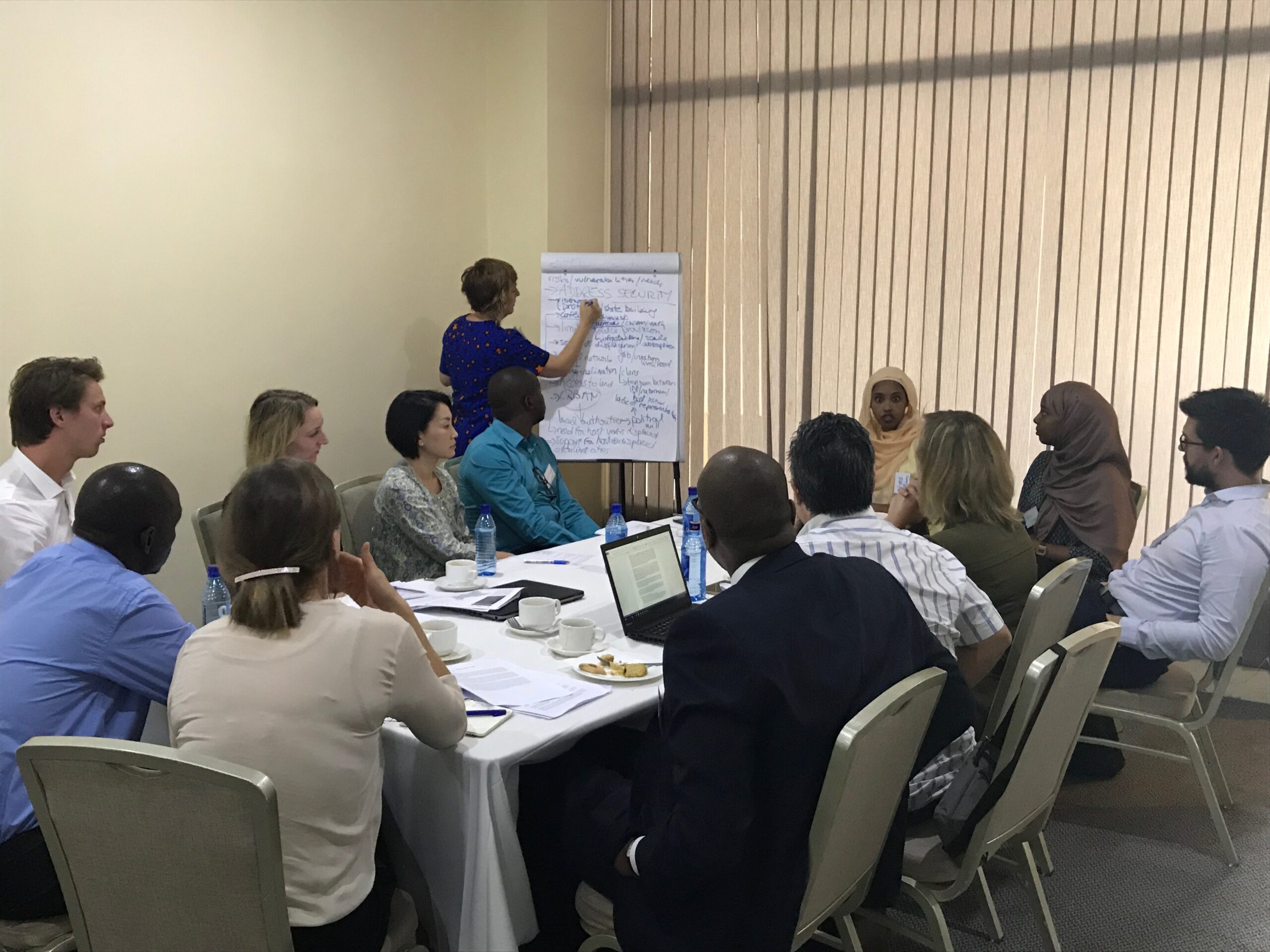
That gap, and what to do about it, framed a regional policy dialogue held in Bahir Dar on June 5 to 6, 2026, part of a wider conference on conflict, displacement, and durable solutions co-organised by Bahir Dar University, the ARS DRMC, and UNDP. The policy panel, moderated by ReDSS on the second day, brought together World Vision, IOM, UNDP, and the ARS DRMC. This piece draws on the proceedings from the dialogue across both days.
What the Region and Its Partners Have Already Built
The DRMC’s 2026 update put the number of IDPs in the region at 460,290, of whom 56,270 are in camps, alongside 853,807 returnees who need self-sufficiency support and 102,345 people newly displaced in a fresh cycle of conflict. The has fallen sharply over the past three years, though it remains high relative to the support reaching the region. The effects are concentrated in specific sectors. For instance, in the education sector: 3.3 million children, including IDPs, are out of school this academic year, and 567 schools have been repurposed by armed forces, armed groups, or as displacement sites.
Government and partners input into the conference demonstrated considerable efforts to scale against this challenge. The DRMC has established emergency coordination centers at regional, zonal, and woreda level, run seasonal needs assessments, and built a regional IDP database to strengthen data management. UNDP, working through government partnerships, has rehabilitated damaged housing, funded cash-for-work in conflict-affected areas, and piloted durable solutions programming in Adi Arkay and Tehuldere, where a livelihoods program reached 720 IDP returnees, 89.2 percent of them women, through business training and psychosocial support. World Vision has paired emergency response with peacebuilding work under the humanitarian-development-peace (HDP) nexus, built around community dialogue, youth engagement, and community-led justice structures. IOM has run income-generation programming for IDPs and host communities together, combining life-skills training with business support to diversify household income and, IOM reports, to strengthen social cohesion between the two groups.
Why Durable Solutions Keeps Losing Ground to Emergency Response
From the conversations, three things emerged that were identified to be working against this progress. Conflict itself remains the dominant constraint: movement restrictions continue to limit aid workers’ access and delivery, compounded by low awareness of, and mistrust toward, humanitarian agencies in some communities. Protracted conflict, insecurity for aid workers, and 2025 cuts tohave together reduced the presence of development and humanitarian partners compared to previous years, with real consequences for the region’s recovery capacity, most visibly in the 13-fold gap between the DRMC’s planned emergency budget and what has actually been funded.
Second, durable solutions work is still crowded out by emergency response, and government, humanitarian, and development actors coordinate weakly with each other. Unless that changes, the region’s Costed Action Plan and Durable Solutions Strategy risk staying aspirational rather than operational.
Third, policy-facing stakeholders in the region lack the shared forums and capacity to turn good practice, on local government engagement, for instance, or on humanitarian delivery in conflict areas, into policy and programming decisions. Read together, these three gaps explain why the response to IDPs, returnees, and host communities remains reactive rather than durable.
What the Dialogue Agreed Needs to Happen Next
The dialogue’s own assessment was direct. The region has the policy architecture for durable solutions, including the DS Strategy, Costed Action Plan, DSWG coordination structure, Regional EPRP, and identified priority hotspots, and there is real appetite among stakeholders for high-level dialogue on displacement. But the HDP nexus is under strain: 1,464,482 people, including current IDPs, returnees, and new arrivals from Sudan, are classified as multi-hazard-affected, and the response to them remains dominated by underfunded emergency programming.
Participants converged on three priorities. First, design and fund interventions that reach IDPs living among host communities and not only those in camps, since most of the region’s displaced population falls into the former group. Second, shift the balance of investment from emergency response toward rehabilitation, reintegration, and anticipatory action, tracked through shared monitoring and collective learning. Third, strengthen coordination itself: a whole-of-government approach to durable solutions planning, sustained engagement with donors and partners on resourcing, and structured dialogue between federal, regional, and community actors to address the root causes of displacement and conflict directly.
Academia has a specific role to play in closing these gaps. Bahir Dar University and other regional research institutions are positioned to generate the disaggregated, conflict-sensitive evidence the durable solutions space is short of, on host community needs, on what is and is not working in local government engagement, on the psychosocial impact of protracted conflict on children in particular, and to feed it directly into planning rather than into academic output alone. Data does not just describe the durable solutions gap in Amhara; closing the gap depends on that data reaching the people who set policy and hold the budget.
The next regional dialogue can gather more evidence and sharpen coordination. It cannot, by itself, close a 36-billion-ETB gap. The money to run Amhara’s plans is what’s missing, and until that changes, the region’s next dialogue will be measured against the same 13-fold shortfall as this one.