
Academia encompasses universities and research institutions engaged in scholarly study and thinking. Beyond publishing papers and teaching students, these institutions drive innovation by assessing how research outputs create real-world impact and contribute to society.
Academic conversations matter because they facilitate the exchange of evidence, expertise, best practices, and lessons learned between and among different generations of researchers. By encouraging intellectual insight, collective thinking, and collaboration, such dialogue helps researchers strategically navigate complex topics like forced displacement. When it comes to realizing the rights and freedoms of displacement-affected communities (DACs), policymakers and stakeholders need relevant, reliable, representative, and up-to-date evidence to inform their engagement and advocacy efforts.
Understanding Durable Solutions for Displaced Communities
The concept of durable solutions (DS) rests on the core principle of comprehensively protecting displaced persons. We achieve durable solutions when displaced people no longer need special protection support and can claim and access their rights without discrimination based on their displacement status.
Since its establishment in 2015, ReDSS has maintained focused momentum and stakeholder engagement towards durable solutions for DACs in East and the Horn of Africa. The organization serves as a coordination and information hub, catalyzing forward-thinking policy development on durable solutions. ReDSS’s Shared Agenda captures the political, economic, and social barriers that impede DACs as priority areas. As part of its work, ReDSS meaningfully engages with research partners including local and international universities, think tanks, and research consultants.
Launching EFDEF: A New Platform for Evidence and Collaboration
Recognizing the need to amplify academic conversation and contribution in the field, ReDSS partnered with the Addis Ababa University Research Chair for Forced Displacement and Migration Studies. On November 18, 2025, they launched the first-of-its-kind Ethiopian Forced Displacement Evidence Facility (EFDEF) in Addis Ababa. This blog captures the Facility’s aims and presents key reflections and practical ways forward from the launch workshop.


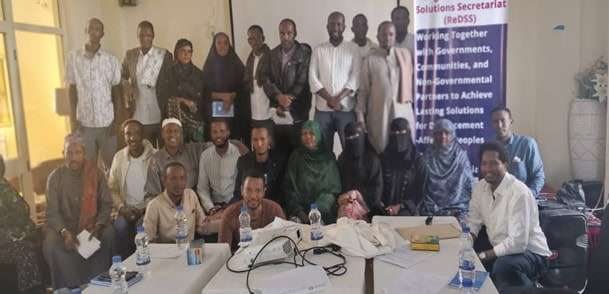
Participants at the launch of the EFDEF
The Genesis of EFDEF: From Informal Gatherings to a Formalized Platform
As a coordination and information hub, ReDSS affirms the centrality of reliable, relevant, representative, and up-to-date evidence to its work. This conviction stems from the understanding that such evidence informs and guides the design and implementation of durable solutions for DACs across the Horn and East Africa. ReDSS coordinates the collection and dissemination of forced displacement evidence across its country offices.
Previously, ReDSS Ethiopia coordinated periodic yet informal gatherings of researchers specializing in forced displacement. However, internal displacement in Ethiopia remains a deeply concerning issue, and the need for well-consolidated academic conversation and contribution became clear. ReDSS Ethiopia envisioned strategically advancing these efforts by creating a formalized and regular platform that brings together diverse academia and researchers within the field.
EFDEF's Mission: Facilitating Evidence Exchange and Policy Influence
Recognizing the contribution of such a collective effort in broadening, deepening, and enriching research initiatives, policy influence, and local dialogue and collaboration on durable solutions, ReDSS Ethiopia and the Research Chair held a EFDEF network launch event.
EFDEF aims to facilitate the establishment of an open, inclusive, and tailored deliberative and networking platform. This platform enables the exchange of reliable, relevant, representative, and up-to-date evidence, and supports the articulation of a collective voice from academia and researchers on durable solutions. The goal is to inform policies, advocacy, and programmatic initiatives on the rights of DACs in Ethiopia, the broader East and Horn of Africa regions, and the African continent at large. Beyond this general objective, EFDEF also aims to delve into specific thematic issues within forced displacement and produce evidence documents such as blogs, reflections, and commentaries.
Key Reflections from the EFDEF Workshop
Who Participated: Building a Diverse Research Community
Focusing on internal displacement governance in Ethiopia, the workshop brought together a diverse set of local and international academics and researchers. Twenty-six participants (22 male and 4 female) attended from Addis Ababa University, Bahir Dar University, Wollo University, Adigrat University, Jimma University, Jigjiga University, Gambella University, Ethiopian Civil Service University, Oromia Police College, Friedrich-Ebert-Stiftung, AfroRoads Consulting, Agora Consulting, and Altai Consulting.
Post-event evaluation revealed that 72.7% of participants had engaged in the field for more than 10 years, while 22.7% and 4.55% had engaged for 5-10 years and 2-3 years, respectively. Participants have had research engagements related to the subject matter through policy and governance, conflict, human rights, peace and security, development, climate change, and DACs.
Workshop Structure: Networking, Evidence-Sharing, and Dialogue
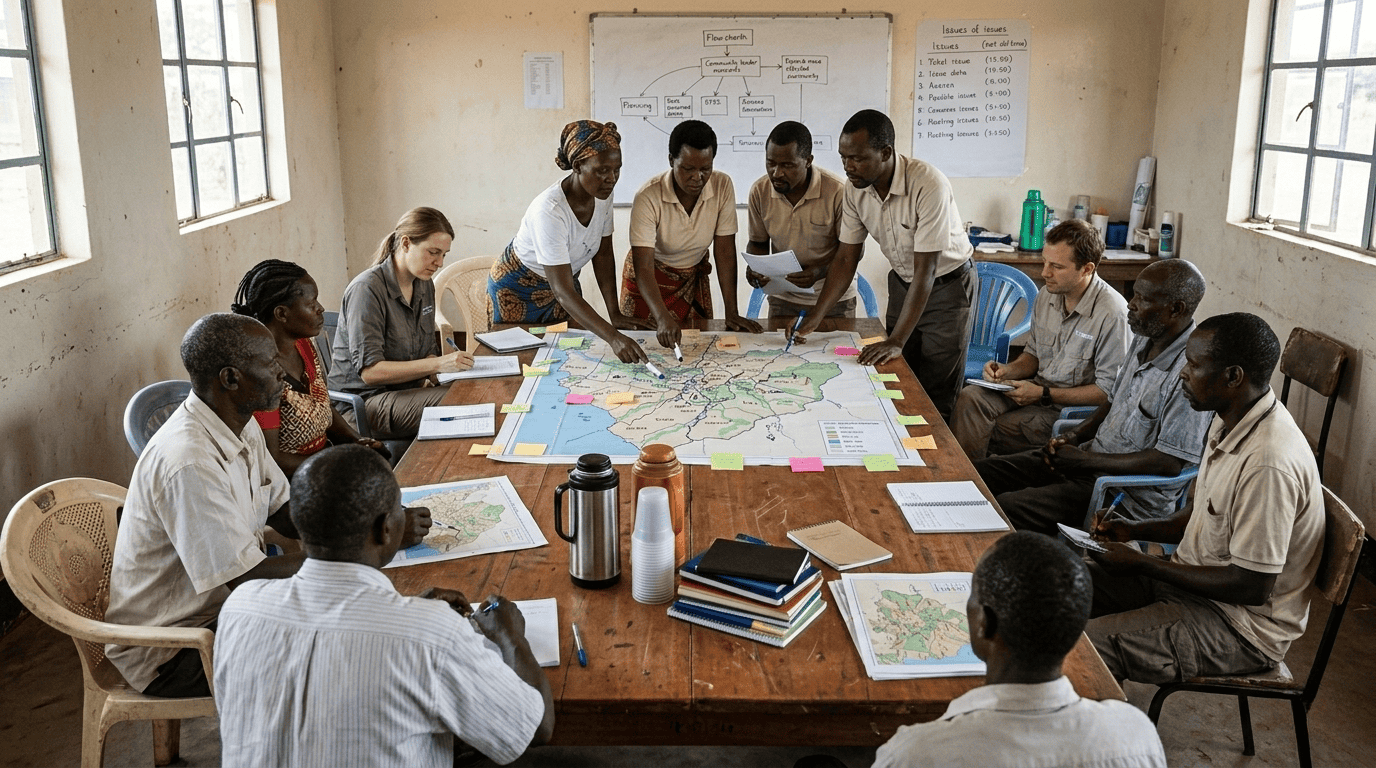
The workshop proceedings innovatively engaged participants in a networking and research evidence-sharing session where they became acquainted with one another and with the respective research engagements pertinent to their regions and organizations. Following this, a reflection and dialogue session enabled participants to deliberate in detail on the local IDP context, governance schemes (existing legal instruments, policies, and institutional arrangements), progress and achievements, gaps, and the role of academia, researchers, ReDSS, and EFDEF in promoting durable solutions in the country.
Critical Challenges Identified by Participants
Participants reflected on several critical issues affecting internally displaced persons in Ethiopia. These included the increasing politicization of the local IDP issue; persisting and critical legal and institutional gaps, coupled with lack of funding and political will; resistance by gatekeepers and varying levels of interest and commitment by academic institutions in the topic; the absence of a clear and agreed-upon understanding of IDPs, their needs, and the respective mandates of concerned actors.
Workshop discussions also highlighted the growing humanitarian concerns facing IDPs, including their reduction to mere statistics, and the increasing focus on conflict and climate-induced internal displacement as opposed to under-researched development-induced displacement. Participants noted poor government IDP response mechanisms owing to inadequate institutional capacities and politically influenced approaches. They also identified challenges around the inaccessibility of IDP centers to researchers, the fluidity of IDP camps, and related issues of data scarcity and unreliability, including uncertainties about the actual number of IDPs.
Critically, participants emphasized the importance of unearthing deeply embedded root causes and driving factors that perpetuate the cycle of forced displacement within the country, including Poverty and unemployment, Political instability, Resource competition, Human rights violations and abuses.
Research Priorities and Practical Solutions
In response to these critical reflections, participants proposed advancing the role and contribution of academia and researchers within the local IDP and forced displacement spaces through several key initiatives. They called for country-level and in-depth research studies, as well as research symposiums as means of soliciting interest and ownership from academic institutions. These initiatives would help mitigate existing gaps around conceptual clarity and consensus, identify and deliberate on root causes and triggers, and generate reliable, relevant, representative, and up-to-date data on conflict, climate, and development-induced displacement.
Participants also emphasized the need for advanced data generation to inform policies, institutional arrangements, sustainable funding alternatives, and displacement response mechanisms. They stressed the importance of promoting meaningful collaboration among actors to capture and address the holistic needs of IDPs, including psycho-social support, alongside the needs of host communities in Ethiopia.
Impact and Future Potential of EFDEF
Post-engagement feedback findings confirmed that the workshop facilitated a unique and tailored platform for members of academia and researchers to advance their network base. Participants noted that this would contribute to enriching their current engagement and expertise, identifying relevant topics for future studies, enabling research partnerships, and sharing lessons learned on methods and methodologies for IDP research.
Moreover, participants affirmed the initiative’s potential in soliciting synergy around academia and researchers’ meaningful conversation and contribution in evidence-generation, policy, and advocacy within the space for the realization of durable solutions in the country.