
The Kenya Evidence Platform annual conference titled “From participation to inclusion: Embedding refugees in research, employment, and decision-making in Kenya.” convened a diverse group of stakeholders (academia, government agencies, UN bodies, donors, municipalities, refugee-led organisations, researchers, and host community representatives) at Villa Rosa Kempinski, Nairobi. The two-day event held on the 8th and 9th of September 2026 was led by collaborative efforts between the Refugee-led Research Hub (RLRH), Maseno University, and the Regional Durable Solutions Secretariat (ReDSS) with financial support from the Dutch Ministry of Foreign Affairs in Kenya.
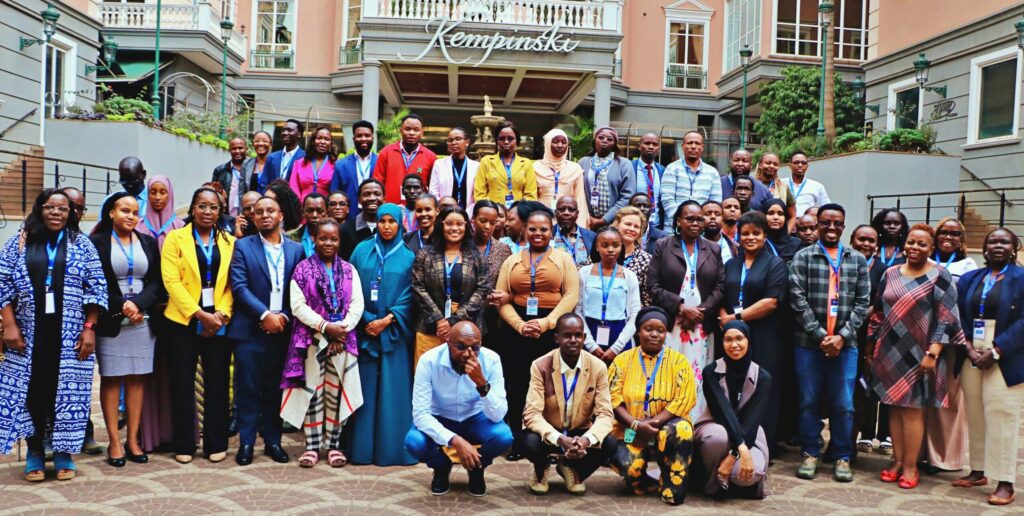
Participants of the third annual Kenya Evidence Platform Conference take a photo outside the venue, Villa Rosa Kempinski on 8th September, 2026 – Credit ReDSS, 2026.
The transition from emergency response to sustainable development in host nations requires a fundamental shift in how international partners, national governments, and host communities engage displacement-affected populations. The annual conference convened to confront a central systemic question: When does participation become true inclusion?
The consensus across panel halls was unanimous: participation means simply being in the room, while inclusion means having the power to shape what happens there. Over its three-year arc, the Kenya Evidence Platform has evolved from making the initial case for locally led knowledge production to testing solutions against complex ground realities. As implementation of Kenya’s landmark Shirika Plan moves forward, the focus must shift from proving why inclusion matters to scaling what works, while remaining candid about operational bottlenecks.
Reforming Administrative Pathways for Economic Inclusion
Economic integration remains constrained by administrative complexities. Despite an estimated population where, over 30% of refugees are youth of working age, official data indicates that only 52 active Class M work permits were held by refugees in Kenya as of July 2026.
This stark gap stems from structural bottlenecks within the Class M permit process. The single-year validity period forces applicants and employers into continuous annual renewals, while opaque timelines leave qualified candidates waiting indefinitely. Employers face a catch-22: an official offer letter is required to initiate a permit application, yet businesses cannot keep vacancies open indefinitely while waiting for administrative clearance.
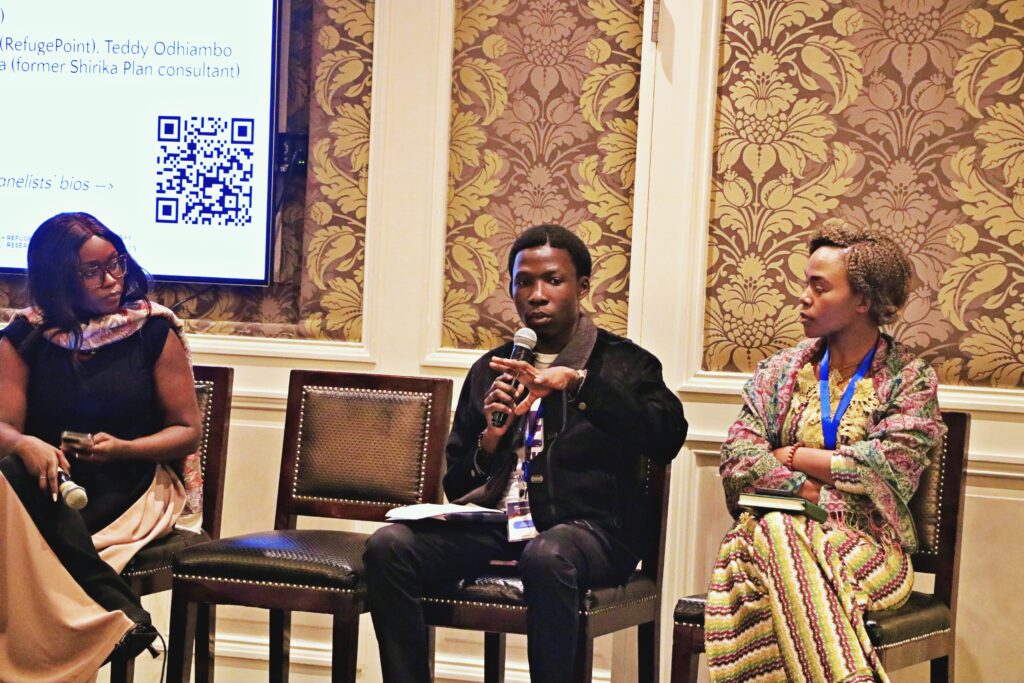
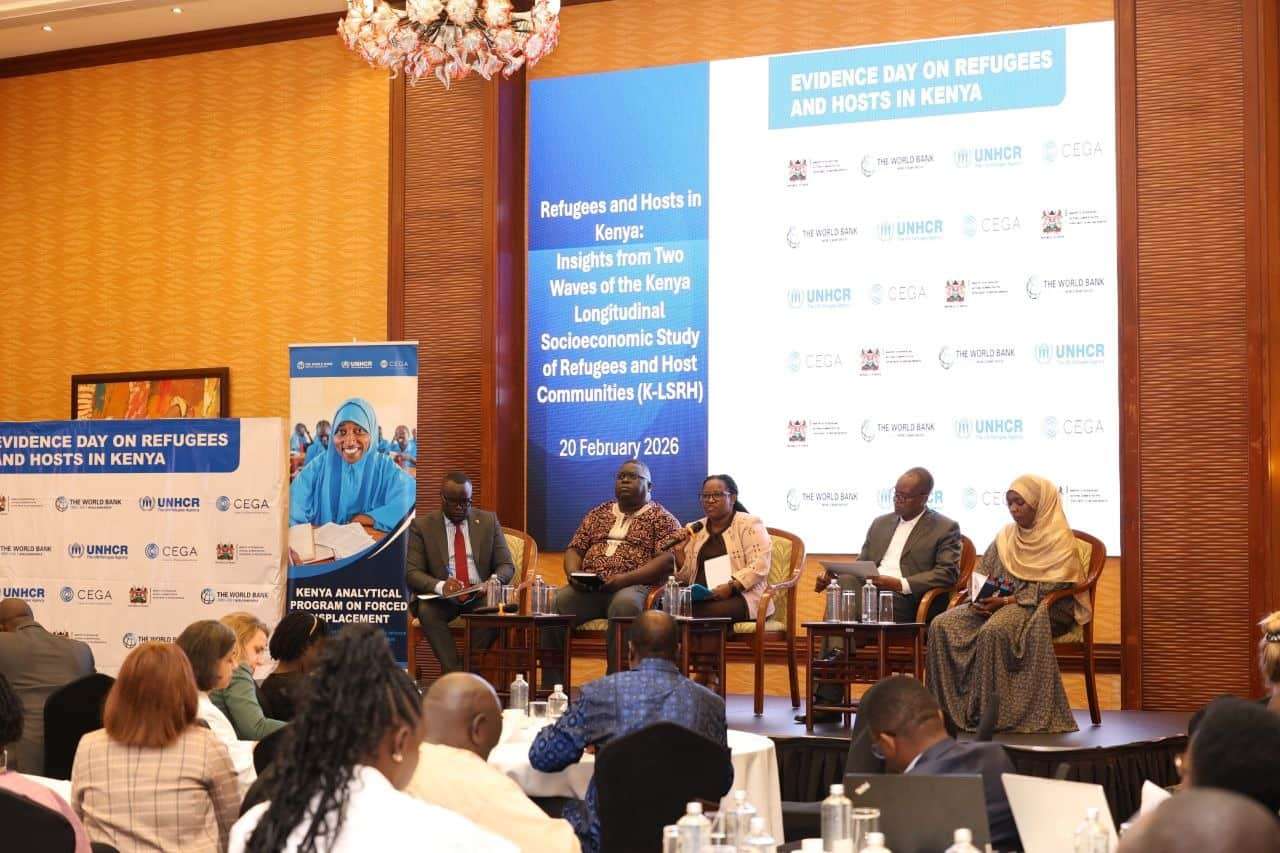
Panel 1: “Walking the Talk: Hiring Refugees in Kenya, Separating Myths from Facts.” moderated by Nyaruiru Ndungi (ReDSS) with panelists Anne Marie Manishimwe (Refugepoint) and Teddy Odhiambo (Kituo Cha Sheria) during the KEP Conference – Credit ReDSS, 2026.
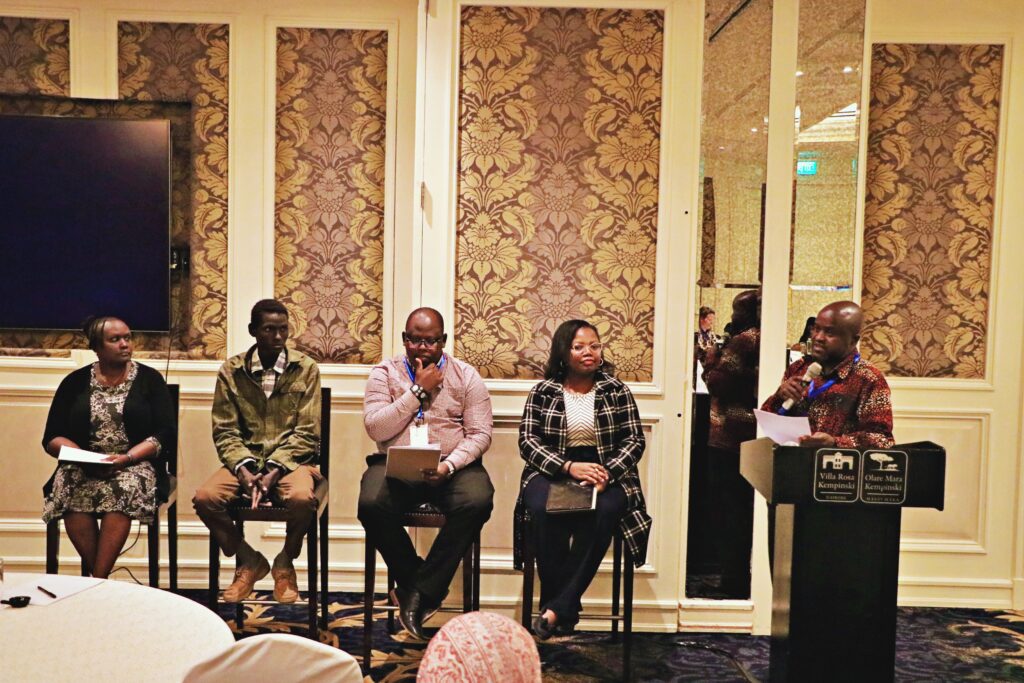
Panel 2: “Researching with Refugees and Generating Evidence Locally: What Has Changed and What Has Not?” moderated by Dr Michael Owiso (FOMREK) with panelists (L-R) Dr Lilian Magonya (FOMREK), Peter Kidi (Poet & Refugee Activist), Dr Bernard Musembi (FOMREK) and Winnie Makau (RLRH) during the KEP Conference – Credit ReDSS, 2026.
Panels highlighted how these administrative friction points create severe costs for both workers and employers. As clinician Anne-Marie shared during her panel journey, securing formal employment often demands years of manual, in-person follow-ups to navigate portal delays:
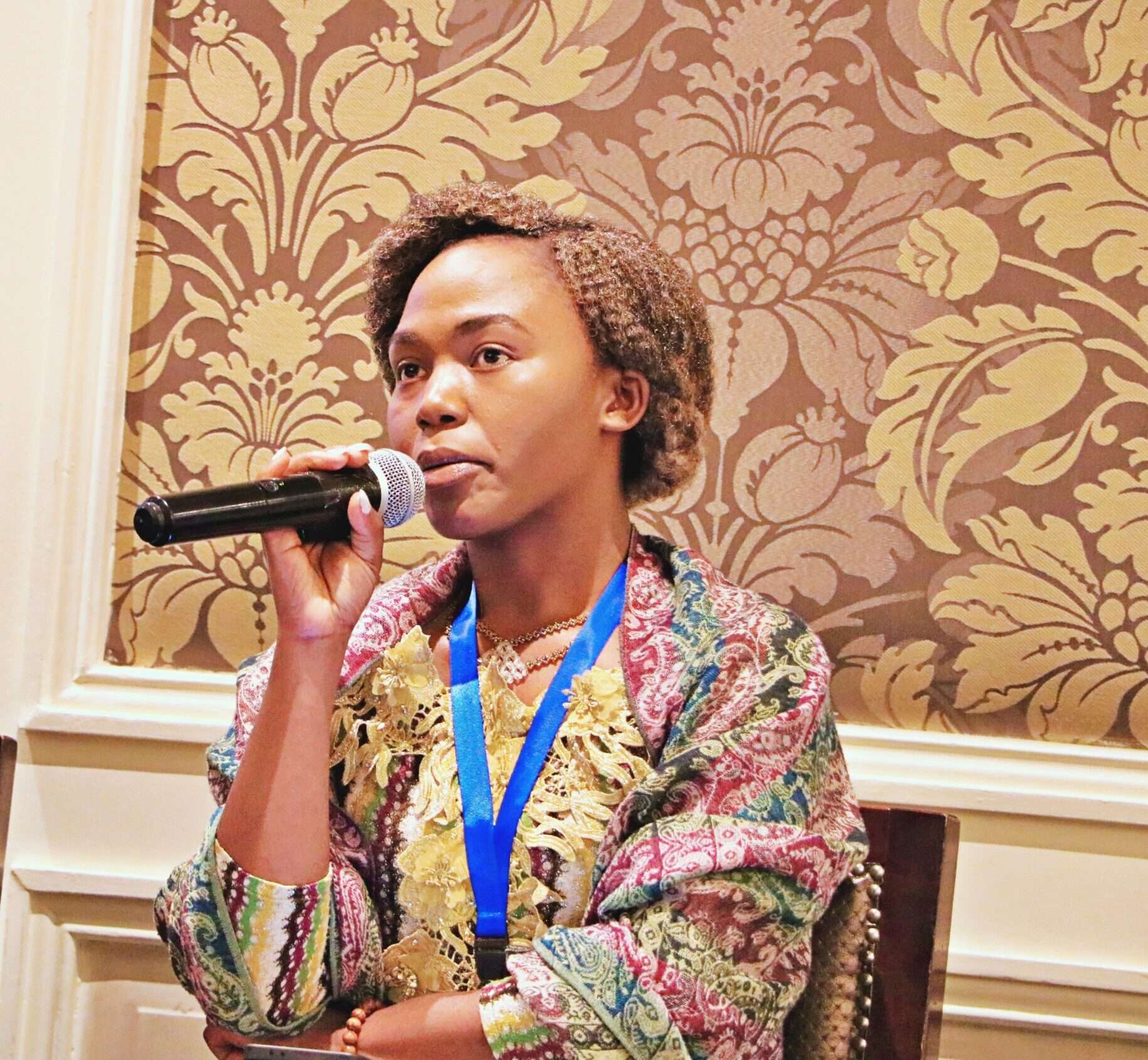
Rejection or delay is often a reflection of structural bottlenecks, not a disqualification of your skills. While navigating these systems, it is vital to lead with your professional strengths rather than introducing yourself solely through your refugee status
Reframing refugee hiring through an ecosystem lens shows that cutting the red tape in these administrative mechanisms benefits the broader economy. When employers engage refugee talent through formal channels, statutory contributions, such as PAYE, NSSF, and health insurance, flow directly into national systems. Overcoming the perception that refugee employment is a zero-sum game requires administrative predictability and modern regulatory frameworks.
Localising Research and Generating Grounded Evidence
A central theme of the dialogue was the necessity of rebalancing power dynamics within research ecosystems. Historically, international research partnerships have placed conceptual design and funding in the Global North while utilising local partners primarily for field access.
Through networks like FOMREK, local researchers, including displacement-affected academics, are setting the agenda and interpreting the data themselves, then following through on what the findings are used for. Locally led research surfaces critical operational nuances that external studies often overlook. For example, local inquiries revealed how mid-process freezes in third-country resettlement programmes left affected individuals without clear legal documentation, aid eligibility, or formal referral pathways.
Delegates called for a unified research infrastructure to address knowledge gaps. With over numerous studies conducted on the refugee context in Kenya, establishing a centralised, open-access research repository would cut duplication and spare communities repeated research fatigue, so the evidence actually reaches national policymaking under the Shirika Plan.
Multimodal Dissemination for Broader Policy Impact
To bridge the gap between academic findings and actionable policy, evidence must reach beyond traditional journal articles. Research dissemination is an ongoing journey that requires adapting formats for diverse audiences.
The presentation of participatory short films produced by FilmAid demonstrated how visual storytelling translates complex legal and mental health findings into broad public dialogue. By engaging community members directly in media production, multi-format dissemination acts as both an evidence tool and a direct vehicle for creative-sector employment.
The Path Forward: A Blueprint for Collective Action
Moving from consultative meetings to structural inclusion requires synchronised commitments across the entire ecosystem. Here is how each stakeholder group can operationalise these insights immediately:
Government & Regulatory Bodies
- Strategic Priority: Extend Class M work permit validity to 3–5-year periods aligned with employment contract durations, and digitalise application tracking.
- Immediate Action: Establish dedicated refugee justice and administrative desks within local court systems to improve legal access and procedural clarity.
Employers & Private Sector
- Strategic Priority: Adopt inclusive HR practices, such as blind, anonymised application reviews, and engage refugee professionals through standard payroll channels rather than informal arrangements.
- Immediate Action: Audit existing recruitment frameworks and partner with platforms like RefugePoint to pilot formal refugee talent onboarding pipelines.
Research Institutions & Academia
- Strategic Priority: Enforce ethical feedback loops that validate findings with host and refugee communities prior to publication, moving from data extraction to co-ownership.
- Immediate Action: Deposit current studies and policy briefs into the FOMREK Open Repository to ensure evidence actively informs Shirika Plan implementation.
Development Partners & Donors
- Strategic Priority: Shift toward multi-year, flexible funding models that cover local institutional overhead and capacity strengthening for local research partners.
- Immediate Action: Earmark standalone funding streams dedicated specifically to refugee legal literacy and community-led research platforms.