
By the end of 2024, 123.2 million people worldwide had been forced from their homes, with 73% hosted in low and middle-income countries. Ethiopia bears a significant share of this responsibility, hosting close to 1.1 million refugees and asylum-seekers. Women make up 52% of this population, with most people originating from South Sudan (41%), Somalia (33%), Eritrea (17%), and Sudan (8%). While 75% live in one of 20 camps scattered across the country, their ability to move freely remains severely restricted.
The Danish Refugee Council predicts another 6.7 million people will be displaced globally by the end of 2026. As these numbers grow, the question becomes urgent: how can host countries like Ethiopia balance security concerns with refugees’ fundamental right to movement?
Why Movement Matters
International frameworks including the 1951 Refugee Convention, the Universal Declaration of Human Rights, the International Covenant on Civil and Political Rights, and the OAU Convention Governing the Specific Aspects of Refugee Problems in Africa all affirm freedom of movement as a basic right. The Protocol to the Treaty Establishing the African Economic Community Relating to Free Movement of Persons, Right of Residence, and Right of Establishment and the East African Community Common Market Protocol further strengthen this commitment. Yet the gap between policy and practice remains wide.
Refugees face interconnected challenges related to safety, access to food and education, employment opportunities, cultural barriers, and trauma. Restricting their movement amplifies these problems. Long-term encampment limits refugees’ ability to work, learn, and contribute to their host communities.
Refugee-led organizations (RLOs) face particularly unique challenges. These organizations carry out advocacy, protection, assistance, and service provision mandates that require temporary travel for education, training, networking, and resource mobilization. When cross-border movement becomes nearly impossible, these organizations cannot function effectively, leaving refugee communities without crucial representation and support.
From Continental Advocacy to National Action
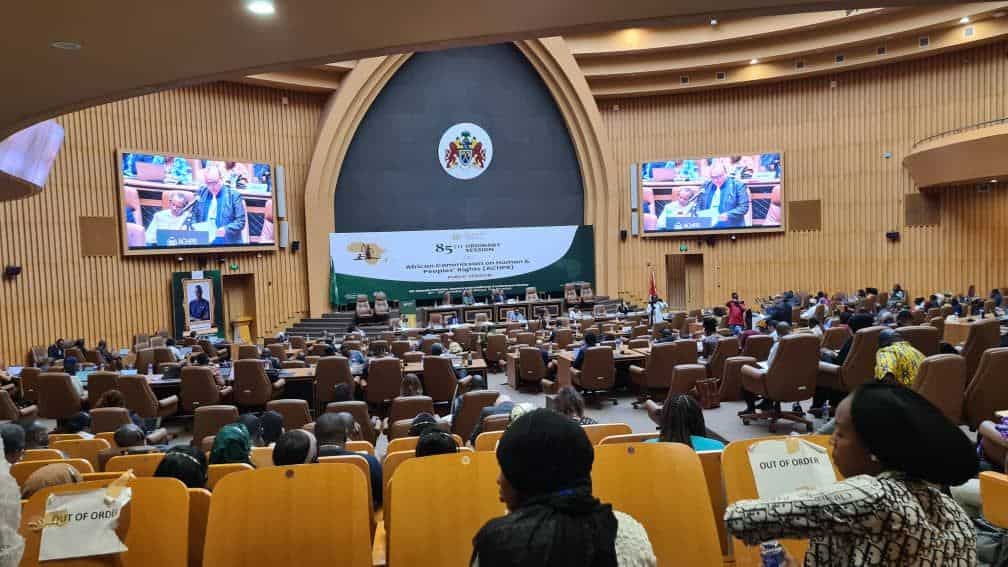
In October 2025, ReDSS and partner organizations held a high-level side event during the 85th Ordinary Session of the African Commission on Human and Peoples Rights in Banjul, Gambia. The event, titled “Advancing Freedom of Movement for Forcibly Displaced People in the East and Horn of Africa,” brought together refugees, policymakers, and human rights experts.
The panel included Honourable Commissioner Salma Sassi, the Special Rapporteur on Refugees, Asylum Seekers, Internally Displaced Persons, and Migrants in Africa, alongside Professor Siobhán Mullally, UN Special Rapporteur and Chair of the Independent Experts Group. Refugees shared their lived experiences, highlighting the direct relationship between freedom of movement and their pursuit of durable solutions for self-reliance and contribution to national development.
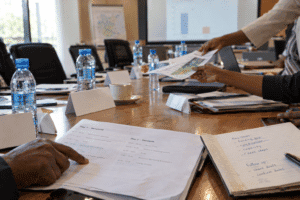
Building on this momentum, ReDSS partnered with the Lutheran World Federation, Independent Diplomat, and Tomorrow is Better to organize a follow-up advocacy workshop in Addis Ababa on November 17, 2025. This strategic half-day session engaged high-level stakeholders from the Refugee and Returnees Service (RRS), UNHCR, the International Labor Organization, the Netherlands Embassy, the Ethiopian Human Rights Commission, and representatives from both camp and urban-dwelling refugee communities.
Ethiopia's Mixed Record on Refugee Rights
Ethiopia has a long history of hosting refugees and maintaining an open-door policy alongside protection schemes. Recent years have seen notable progress. The country adopted the Refugee Proclamation (Proclamation No. 1110/2019), which aligns national law with international and continental commitments on sustainable solutions. Directive No. 1019/2024 implements refugees’ and asylum seekers’ right to work, while Directive No. 01/2019 determines conditions for movement and residence outside camps. The country is also drafting the Mekatet (Inclusion) Roadmap to implement plans from the Global Refugee Forum (GRF).
Yet significant barriers persist. Policy restrictions confine refugees to camp settings, limiting their right to work, and move freely. Weak financial systems and poor infrastructure create economic barriers. Political and security concerns, combined with social barriers that develop from mistrust and hostility with host communities, compound these challenges.
ReDSS’s Shared Agenda innovatively approaches durable solutions conversations in Ethiopia by confronting these barriers through evidence generation, dissemination, and meaningful stakeholder engagement at sub-national, national, and continental levels.
What Refugees Are Actually Experiencing
During the Addis Ababa workshop, camp and urban-dwelling refugees acknowledged the commitment of government and non-governmental stakeholders including the RRS, Information and Citizenship Services, Authority for Civil Society Organizations, UNHCR, and the International Organization for Migration. They specifically noted the vitality of strategic platforms like the Banjul side event and the workshop itself in enabling them to advocate for their needs and concerns.
However, they also detailed pressing and persistent problems. Government personnel, especially at sub-national levels, often lack legal literacy about refugee rights and documentation requirements. Service providers frequently don’t recognize refugee status or understand refugees’ legal freedoms. Even refugees themselves sometimes lack clear information about visa renewals and exit visa processes.
Travel permit applications for moving between camps and other areas within Ethiopia remain cumbersome and mandatory. Convention Travel Documents, which enable cross-border travel, involve painstaking application processes. The current hand-written CTD format creates additional problems when refugees try to use these documents for temporary international travel.
Unregistered asylum-seekers face dire circumstances, including family separation and children unable to enroll in school. When authorities try to return these individuals to camps, the process creates new adversities. Identification documents remain fragmented, even with the introduction of the Fayda National ID system. Discriminatory practices persist in transport tariffs charged to refugees at sub-national and national levels.
Government and Agency Responses
RRS representatives demonstrated interest in engaging in continental-level initiatives aimed at collaborative engagement. They acknowledged the need for further inter-institutional and intra-institutional dialogue to address literacy gaps among personnel, raise awareness, and eliminate discriminatory tariff practices. They noted ongoing deliberations about installing an advanced machine-readable CTD system.
RRS officials emphasized the need to consider national interests alongside thorough awareness-raising initiatives for refugees. These initiatives should help refugees understand their rights, required and permissible travel application documents, exceptional cases leading to permission to reside outside camps, and the importance of abiding by rules and regulations as a means of building social trust and cohesion. They pointed to existing opportunities for camp-dwelling refugees to attend temporary in-country workshops upon invitation and fast-tracked travel applications available for emergency cases.
A senior UNHCR participant acknowledged progress in Ethiopia’s legal framework while underscoring the need to mitigate existing implementation gaps. He emphasized that freedom of movement synchronizes with other refugee rights, particularly the right to livelihood. UNHCR is working alongside other concerned stakeholders toward realizing a paperless CTD scheme and supports inter-agency dialogue aimed at raising refugee awareness to abide by local laws. The organization advocates for enforcement of alternative administrative measures, as opposed to detention, to resolve issues with unregistered asylum-seekers in the country.
The Path Forward: Eleven Concrete Action Points
The workshop concluded with a call for concerted action from all governmental and non-governmental actors. The group identified eleven specific priorities:
Stakeholders need a broader and common understanding of freedom of movement. They must balance national interests with the rights and freedoms of refugees and asylum-seekers. This requires robust government leadership and ownership, broader dialogue including agencies like the Immigration and Citizenship Service (ICS) and the Authority for Civil Society Organizations (ACSO), an advanced refugee governance scheme, and expertise gained through cross-country learning. These elements should work together to build consensus and collaboration that can mitigate painstaking mandatory exit visa requirements.
Clear and consolidated inter-agency and intra-agency information sharing mechanisms must capture local contexts. Identification systems need integrated and synchronized utilization, including the Fayda National ID as part of durable solutions. In-depth, policy-oriented research should assess linkages between access to documentation, free mobility, out-of-camp residence, and “de-campization.”
Practical guidelines must govern refugees’ in-country and cross-boundary mobility, including procedures for refugees with lost IDs. Innovative and sustainable integration schemes like the Kebribeyah Inclusion Roadmap Project, which links camps to adjacent cities, offer promising models. Permit processes must become more dignified, flexible, and advanced for both in-country and cross-country travel.
Holistic support mechanisms should build capacity for RLOs, helping them establish umbrella associations for collective action, supporting their temporary cross-country travels, managing registration processes, and conducting advocacy work.
Finally, refugees must be meaningfully engaged alongside host communities and other relevant stakeholders in future discussions. These conversations should further unpack resource and intervention coordination at national and sub-national levels.
Making Rights Real for Durable Solutions
The workshop, building on the Banjul experience, underscored the pressing and persistent barriers refugees face in Ethiopia at national and sub-national levels. It reaffirmed that refugees’ freedom of movement is a critical component of their capacity to build resilience and shape their futures.
Ethiopia has made positive policy and institutional strides within its national refugee governance scheme. Yet the workshop urgently called for government ownership and leadership, complemented by meaningful engagement and collaboration from all relevant stakeholders, including refugees and asylum-seekers themselves. Only through this concerted effort can the country promote freedom of movement and access to documentation rights in service of realizing durable solutions for 1.1 million people seeking both safety and the chance to rebuild their lives.