Qolaji is the largest internally displaced persons (IDPs) settlement in Ethiopia’s Somali Region, currently hosting approximately 15,500 households with an estimated 98,000 individuals. Most residents fled between 2016 and 2017 due to ethnic-based violence and widespread insecurity in the East and West Hararghe Zone of Oromia Region. The conflict destroyed lives, homes, and assets. Communities lost livestock and businesses, and women and girls faced grave protection violations, including sexual violence.
Since their displacement, the IDPs in Qolaji have faced persistent challenges accessing essential services and rebuilding their lives. The community identified one critical barrier above all others: the lack of formal identification. Without legal identity documents, individuals cannot access basic services or participate in livelihood and self-reliance programs. In September 2025, UNHCR partnered with the Somali Regional Disaster Risk Management Bureau (DRMB) to address this long-standing documentation gap.
Launching a Gateway to Visibility and Rights
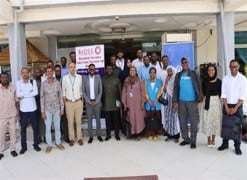
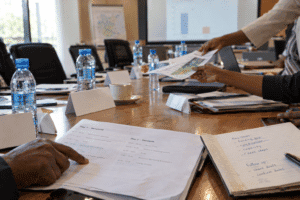
In October 2025, the Regional Durable Solutions Secretariat (ReDSS) participated in the launch of the Fayda ID Program in Qolaji. The event brought together regional and local authorities, humanitarian and development partners, and community representatives to mark an important milestone in promoting inclusion and durable solutions for displacement-affected communities.
The Fayda ID aims to provide national digital identification cards to 100,000 IDPs and 30 percent of the surrounding host community. For those who have lived for years without legal recognition, this initiative represents more than a technical intervention. It offers a gateway to visibility, rights, and opportunity.


The decision to launch the program in Qolaji carried symbolic weight. This community has lived the reality of displacement, where IDPs and host communities have shared challenges but also demonstrated shared resilience.
The strong presence and leadership of Somali regional and local authorities during the launch demonstrated growing government ownership of durable solutions.
It also showed a shift in narrative: IDPs are not temporary populations to manage but citizens to include.
Breaking Down Barriers to Inclusion
By granting legal identity, the Fayda ID can remove long-standing barriers that prevent IDPs from accessing education, healthcare, banking, business cooperatives, and employment. It also supports their freedom of movement and participation in social and economic life.
However, the path to full inclusion faces real challenges. One of the most pressing concerns involves building trust among displaced communities. Many IDPs have experienced years of marginalization and uncertainty, which creates hesitation or fear around registration processes, particularly when sharing personal data. The program must ensure transparency, digital literacy, and clear communication about how data will be used to build confidence in the system. Balancing access rights with security, equality, and privacy protections remains essential.
Overcoming Operational Challenges
In remote areas of the Somali region, limited internet connectivity, weak administrative capacity, and mobility constraints could delay registration or exclude some populations. Reaching other IDP sites will require creative, flexible approaches. Certain groups face particular risk of exclusion: women, elderly people, people with limited or no educational background, and persons with disabilities may be unintentionally left out unless the program makes targeted efforts to include them.
Beyond technical and operational barriers, sustainability remains critical. Rolling out the Fayda ID requires consistent funding and coordination across multiple levels of government. To succeed, the program must link closely to service delivery and livelihood support so that registration benefits become visible and tangible. When IDPs see that having an ID helps them enrol their children in school or access healthcare without difficulty, confidence in the program will grow.
Aligning Local Action with National and Global Frameworks
At the national level, the Fayda ID aligns well with Ethiopia’s National Durable Solutions Initiative and the Digital Ethiopia 2025 strategy, both of which highlight digital identity as a cornerstone for inclusive governance and development. By integrating IDPs into the national identification system, Ethiopia makes a clear statement that durable solutions are not separate from national progress but an integral part of it. This approach bridges the gap between humanitarian response and long-term development planning.
At the continental level, the initiative supports the 2009 Kampala Convention on IDPs, which calls for member states to promote inclusion and self-reliance through access to documentation and national services. Ethiopia’s leadership in rolling out the Fayda ID demonstrates how regional frameworks can translate into measurable progress on the ground.
Globally, the Fayda ID aligns with key international frameworks: the UN Guiding Principles on Internal Displacement, the Global Compact on Refugees, and the Sustainable Development Goals, which call for legal identity for all by 2030. The program underlines how high-level global commitments can be realized through national action that reaches those most often left behind.
Building Momentum Toward Inclusion
The prospects for IDPs to benefit from the Fayda ID are promising, but they depend on how well the program manages challenges, including restrictions on freedom of movement and access to basic services. Strong collaboration between federal, regional, and local authorities, alongside humanitarian and development partners, will be essential. Equally important is meaningful community participation, ensuring that IDPs themselves help shape and monitor the process.
The launch in Qolaji was more than a ceremonial event. It signalled a shift toward recognition, inclusion, and partnership. For ReDSS, participating in this milestone reaffirmed the importance of supporting government-led initiatives and fostering collaboration that links identification to wider goals of service delivery, protection, and livelihoods.
From Invisibility to Dignity
Ultimately, the Fayda ID is more than documentation. It represents dignity. When a displaced person receives a national ID, they are no longer invisible. They gain recognition as part of their country’s future. While challenges remain, the momentum generated in Qolaji offers a strong foundation for the journey ahead toward a future where every displaced person in Ethiopia can say, with confidence, that they belong.