



Unlocking
Protracted
Displacement
The rights of displaced persons, their protection and empowerment, should be at the heart of any programme approach
What we do
The search for durable solutions to the protracted displacement situation in East Africa and the Horn of Africa is a critical humanitarian and development concern. Displacement is a regional/cross-border issue with a strong political dimension, demanding a multi-sector response beyond the existing humanitarian agenda.
ReDSS seeks to improve joint learning and programming, inform policy processes, enhance capacity development and facilitate coordination in the collective search for durable solutions. It is a coordination and information hub that acts as a catalyst and agent provocateur to stimulate forward-thinking and policy development on durable solutions for displacement.
Our Members
The Regional Durable Solutions Secretariat (ReDSS) was created in 2015 to maintain focused momentum and stakeholder engagement towards durable solutions for displacement-affected communities in East Africa and the Horn of Africa.
ReDSS comprises 14 NGOs: Action against Hunger (French: Action Contre La Faim – ACF), ACTED, CARE International, Concern Worldwide, the Danish Refugee Council (DRC), the International Rescue Committee (IRC), INTERSOS, Mercy Corps, the Norwegian Refugee Council (NRC), Oxfam, the Refugee Consortium of Kenya (RCK), Save the Children, World Vision, the Lutheran World Federation (LWF). DRC, IRC, and NRC form the ReDSS steering committee.
Where we work
Established in 2018, the ReDSS Kenya Unit is dedicated to enhancing durable solutions for displacement-affected communities in Kenya. Our approach involves informing programming and policies that promote the integration of displacement-affected communities, enabling them to lead safe, dignified, and productive lives.
Established in 2016, the ReDSS Somalia Country Unit is built upon the Somalia Solutions Analysis and collaboration among ReDSS members. This partnership is focused on enhancing coordination, addressing capacity needs, and fostering collective knowledge management to inform and strengthen the overall response to displacement in Somalia.
Established in 2018, the ReDSS Ethiopia Country Unit emerged through a strategic partnership with the European Union Trust Fund and UNHCR. Our focus is to bolster sustainable and development-oriented responses for refugees and host communities in Ethiopia aligned with the Comprehensive Refugee Response Framework (CRRF) approach.
Established in 2020, the ReDSS Great Lakes Unit was founded as a coordination and information hub to increase the displacement-affected communities’ potential to integrate sustainably and live safe, dignified, and productive lives. The overall objective is to improve durable solutions programming and policies to support their inclusion.
Key figures of displacement in the region
ReDSS work is supported by
ReDSS WorkRegional Updates ReDSS January 2020 bi-monthly update
In this bi-monthly update, you will find ReDSS annual report which highlights the key achievements and challenges in 2019 and...
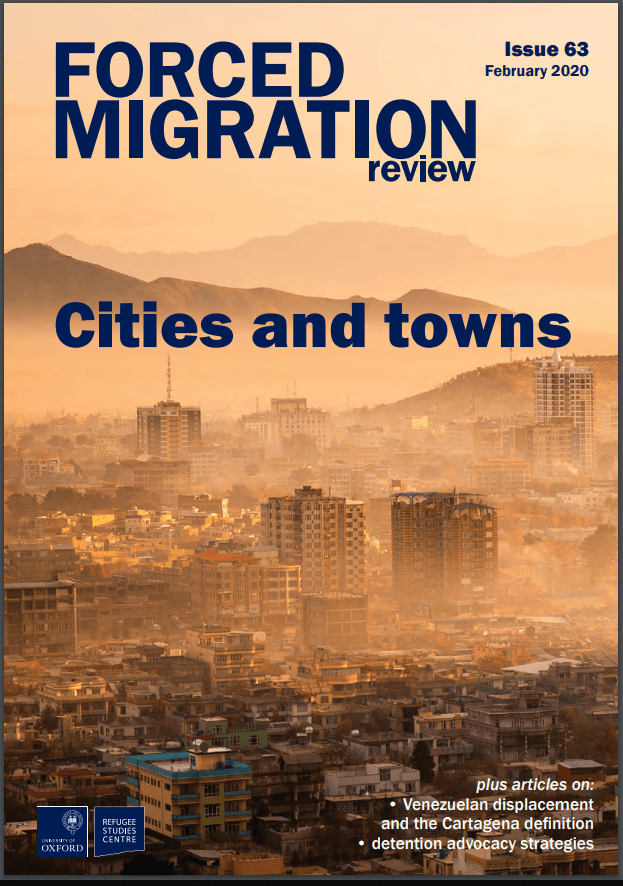
External ReportRegional Updates Forced Migration Review issue on Cities and towns
Cities and towns are on the frontline of receiving and welcoming people who have been displaced. In this issue of...
External ReportRegional Updates Forced Migration Review issue on Cities and towns
Cities and towns are on the frontline of receiving and welcoming people who have been displaced. In this issue of...
External ReportSomalia Multi-stakeholder approach to urban displacement in Somalia- FMR issue on Cities and towns
Cities and towns are on the front line of receiving and welcoming people who have been displaced. In the 20...
ReDSS WorkSomalia ReDSS Adaptive management and value for money approaches
Adaptive management involves testing, monitoring, getting feedback, and crucially, making adaptations and course corrections, as necessary. Effective adaptive management requires...
ReDSS WorkRegional Updates 2019 Annual report and summary presentation
Emerging learning and good practices from East and Horn of Africa region offer much to build upon, adapt, and replicate...