Updated October 2026: this post was first published in May 2017 to share a ReDSS one-pager. We have expanded it with a summary drawn from the one-pager, which is now hosted on our website.
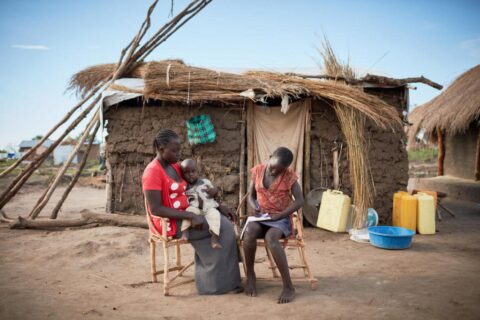
Since conflict erupted in South Sudan in December 2013, and after famine was declared on 20 February 2017, over 1.5 million South Sudanese had been forced to flee by mid-2017, 885,818 of them to Uganda, making it the world’s fastest-growing refugee crisis at the time. Our one-pager notes that almost one in three South Sudanese were displaced and that 86 percent of South Sudanese refugees were women and children. The South Sudanese refugee population in Uganda had tripled in under six months, with arrivals in April averaging more than 2,000 people a day. Bidibidi settlement, set up less than six months earlier, hosted almost 270,000 refugees, and more than 10,000 South Sudanese refugees had reached Kampala, where many struggled without assistance.
With 1.2 million refugees, Uganda was Africa’s largest refugee-hosting country, and according to the one-pager it had taken in more refugees in the previous year than the number of refugees and migrants who crossed the Mediterranean into Europe. Its out-of-camp policy gives refugees freedom of movement, the right to work, land to settle and cultivate, access to public services, and travel and identity documents, and it was the first state to volunteer to pilot the Comprehensive Refugee Response Framework. Yet transit and reception facilities were overwhelmed by chronic underfunding, and the one-pager warns that these progressive policies would be hard to sustain without strong international support. Ahead of the Uganda Solidarity Summit in June 2017, we set out how the international community could support solutions from the early stages of displacement, with a primary focus on building refugee self-reliance and resilience in the country of asylum.
Support joint planning and a national solutions framework
Under the leadership of the Government of Uganda, humanitarian and development actors should develop a national solutions framework with shared outcomes, using a multi-sector, rights- and needs-based approach that covers legal, material and physical safety. Better data and analysis on displaced and host populations would guide combined responses and help local authorities anticipate population movements. Development specialists should be involved from the start of an emergency, and the international community should provide long-term, predictable political and financial support to Uganda and its hosting communities.
Strengthen self-reliance and integrated programming
The one-pager calls for non-emergency specialists, such as urban planners, community engagement experts and local governance experts, to support early planning; for expanding the capacity of local services, including a national surge capacity of service providers; and for pooled funding that combines humanitarian, development and resilience elements, channelled through refugee response plans, the Government’s Settlement Transformation Agenda and the UN-World Bank ReHoPE programme.
Support local leadership and communities
National, regional and local authorities hold primary responsibility for solutions and need support to lead and coordinate them. The one-pager recommends a displacement-affected communities approach that includes refugees and host communities, with accountability to displaced people at the centre, and investment in local and national capacity and institutions so that solutions can be sustained.
Invest in youth, education and urban solutions
Children and young people and their education should be a priority, since failing them risks a lost generation and future conflict and displacement. Knowledge and programming for urban settings also need to improve, as more refugees and returnees live in towns and cities.
Read the full one-pager.
References
ReDSS (2017). Increase support to early solutions for South Sudanese refugees in Uganda. May 2017. https://www.regionaldss.org/wp-content/uploads/2017/05/ReDSS-one-pager-early-solutions-South-Sudanese-refugees-Uganda-May-2017.pdf
UNHCR. South Sudan refugee situation, operational data portal. https://data.unhcr.org/en/situations/southsudan
UNHCR (2017). South Sudan situation: regional update, 1 to 15 April 2017. ReliefWeb. https://reliefweb.int/report/south-sudan/south-sudan-situation-regional-update-1-15-april-2017