Updated October 2026: this post was first published in June 2017 to share our statement ahead of the summit. We have expanded it with a summary drawn from the full statement.
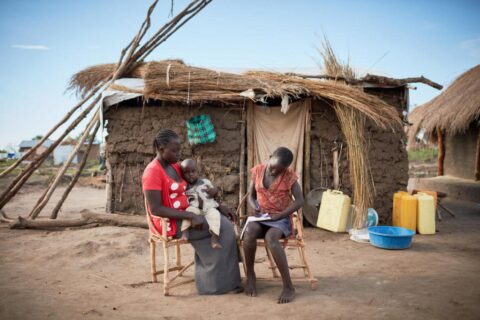
On 22 and 23 June 2017, the Government of Uganda hosted the Solidarity Summit on Refugees in Kampala. The summit asked the international community to back a country that had kept its doors open as conflict in South Sudan drove people across its border. Uganda had hosted displaced people for decades, and with more than 1.2 million refugees it was Africa’s largest refugee-hosting country and among the top three in the world. According to our statement, more than 2,000 South Sudanese were arriving every day, nearly 60 percent of refugees in Uganda were children and young people, and severe humanitarian underfunding put hundreds of thousands of lives at risk.
On 21 June, ReDSS issued a statement from Nairobi welcoming the summit as an opportunity to support Uganda’s effort to implement its progressive refugee policy while hosting large numbers of refugees. Speakers from ReDSS, the Norwegian Refugee Council, the Danish Refugee Council and Save the Children Uganda set out what that support should look like.
What we asked for
We called on the international community to provide long-term, predictable political and financial support to Uganda and its people, in ways that improve inclusive access to services, economic opportunities and infrastructure for all; to fund humanitarian, development and resilience programmes collectively, including long-term funding for education and skills; to share responsibility by increasing resettlement quotas; and to help Uganda implement the New York Declaration through the Comprehensive Refugee Response Framework. We called on the international community and IGAD to redouble efforts to address the root causes of displacement and to find a political solution to the conflict in South Sudan.
We asked development actors to engage from the onset of an emergency, complementing humanitarian work and informing medium- to long-term solutions. We asked all partners to adopt a displacement-affected communities approach that includes refugees and host communities, with accountability to displaced people at the centre; to invest in local and national capacity and institutions so that solutions can be sustained; to engage the private sector on innovation, jobs and public-private partnerships; and to support the Government’s Settlement Transformation Agenda and the Refugee and Host Population Empowerment (ReHoPE) framework.
Protecting a progressive model
The statement recognises that national and district authorities hold primary responsibility for refugees, and calls for building their capacity to deliver services to refugees on the same basis as citizens. It asks that Uganda’s out-of-camp approach, freedom of movement and right to work be protected and built on. Our one-pager on early solutions for South Sudanese refugees in Uganda, published the month before, sets out these recommendations in more detail.
Read the full statement.
References
ReDSS (2017). Statement ahead of the Solidarity Summit on Refugees, Kampala, 22 to 23 June 2017. Nairobi, 21 June 2017. https://www.regionaldss.org/wp-content/uploads/2017/11/June-ReDSS-Statement-Uganda-Solidarity-Summit-1.pdf