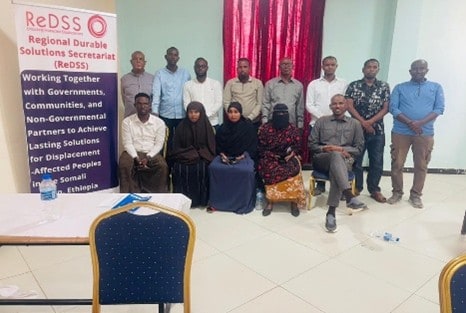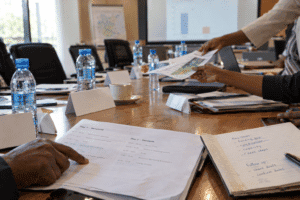
On October 24, 2025, the Regional Durable Solutions Secretariat (ReDSS) brought together 25 civil society organizations (CSOs), UN agencies, international NGOs, and senior government officials at Shahiid Hotel in Jigjiga, Somali Region. The consultation explored how CSOs contribute to solving forced displacement, assessed the real-world impact of previous ReDSS meetings, and identified where partners need more support.
Why Civil Society Organizations Matter
Participants agreed that CSOs play a critical role in addressing displacement because they work closest to affected communities. They bridge the gap between local needs and policy responses in ways that larger institutions cannot. The discussion centered on three priorities: strengthening CSO engagement in durable solutions, advancing localization, and promoting dialogue on the root causes of displacement.
Regional Perspectives on Progress and Challenges
The Somali Region Civil Society Network (SONSAC), which coordinates CSOs across the region, presented on how civil society collectively supports durable solutions and improves coordination among local actors. The Peace and Security Bureau outlined the region’s conflict resolution mechanisms and ongoing peace efforts that create foundations for stability. The Disaster Risk Management Bureau (DRMB) shared updates on strategies and programs that build resilience and support DACs through integrated response planning.
Linking Local Action to National Strategies
Participants emphasized how CSOs connect to larger frameworks like the Durable Solutions Strategy, the Kabribayah Inclusion Roadmap, the Resilience Strategy, and the Humanitarian-Development-Peace (HDP) Nexus initiatives. These frameworks give local organizations direct pathways to shape inclusive, community-driven solutions. The discussions highlighted how CSOs can strengthen their participation in the Nexus approach, refugee response frameworks, and displacement solutions platforms, keeping community voices central to planning and implementation.
What's Driving Displacement
Conflict, drought, and recurring floods continue to force people from their homes in the Somali Region. This requires close coordination among humanitarian, development, and peace actors. The DRMB, working with organizations like SONSAC, has advanced relocation and return initiatives that foster stability and help communities reintegrate. Despite progress in site preparation and community mobilization, limited resources, local conflicts, and coordination gaps still challenge implementation.
Traditional and Modern Approaches to Conflict Resolution
Conflicts within displacement areas often emerge from competition over resources and unequal access to aid. Resolution largely depends on the traditional Somali Xeer system, led by elders (Odayaal), which emphasizes reconciliation (dib-u-heshiisiin) and compensation (mag/diyo). NGO-supported mediation also addresses housing, land, and property (HLP) disputes. These approaches show the strong connection between durable solutions and peacebuilding, underscoring why government, civil society, and traditional leaders must coordinate inclusively to achieve long-term stability.
What Participants Learned
CSOs found the consultation timely, relevant, and closely aligned with their work in peacebuilding, community engagement, relocation, and data collection. Participants noted that discussions were practical and directly applicable, while strengthening their understanding of Durable Solutions Initiatives and CSO roles. ReDSS received positive recognition for its leadership and effective engagement.
Many acknowledged that ReDSS’s ongoing consultations have created positive changes: shifts in attitude, stronger advocacy, improved resource mobilization, empowerment of local actors, and closer alignment with government policies. As one participant said, “Periodic discussions around solutions work help us stay aligned and act collectively.”
Persistent Barriers
The discussions also highlighted persistent challenges that limit CSO capacity. Participants cited funding shortages, limited institutional capacity, weak coordination, and insufficient logistical support as ongoing barriers. They called for ReDSS to continue providing technical and financial assistance to enhance coordination, strengthen partnerships, and build local organizational capacity.
A senior advisor to the President of the Somali Region captured the consultation’s spirit:

"We need joined hands, all actors across partners, including CSOs, to handle the precarious situation of those affected by forced displacement in our region."
Senior Advisor to the President, Somali Region
Moving Forward Together
Participants reaffirmed their roles in supporting DACs through data collection and analysis, peacebuilding, environmental management, and providing essential services like shelter, clean water, healthcare, and livelihoods. The consultation demonstrated that achieving durable solutions in the Somali Region requires continued cooperation between government institutions, donors, humanitarian and development partners, and the CSOs who work closest to the people.
The Somali Region makes steady progress in ensuring DACs can live with dignity, stability, and hope by supporting local CSO leadership and capability while keeping communication channels open. The consultation results show significant improvement in participants’ understanding and commitment to collaborative action.
Collaboration, trust, and teamwork form the foundation of true progress toward lasting solutions. When all stakeholders work together with shared responsibility, durable solutions become achievable.