Updated October 2026: this post was first published in January 2021 to share our 2020 annual report. We have expanded it with a summary drawn from the report.
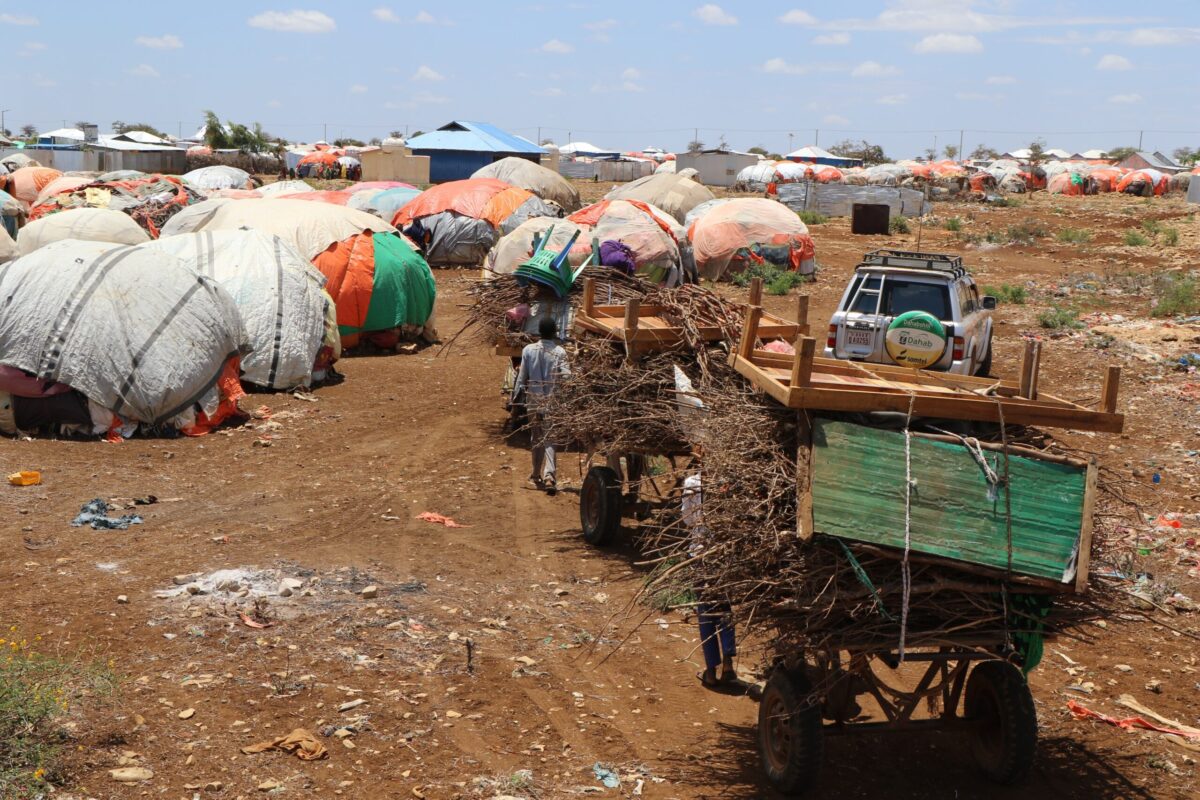
Displacement is a development issue with humanitarian components, so humanitarian, development, peace and state-building programming need to work together towards collective outcomes. In 2020 the COVID-19 pandemic tested that principle across East Africa and the Horn of Africa, where displacement-affected communities already lacked access to basic services and economic opportunities. Desert locusts, flooding, Cyclone Gati and the conflict in Tigray added to the pressure. Our annual report shows how a regional platform kept evidence and dialogue on durable solutions moving when attention shifted to emergency response.
Adapting to COVID-19
We moved our learning events online, with webinars on community engagement, integrated programming and self-reliance; a webinar on COVID-19 communication drew more than 180 participants. We produced four policy briefs on adapting to COVID-19, used in engagement with stakeholders. The report notes that partners shifted to emergency response and that multi-year funding was redirected to short-term needs, which it expects to have long-term effects. Across the year, 704 participants from more than 218 organisations took part in 13 learning events, and we trained 169 practitioners and policymakers in six sessions. Our website recorded more than 22,000 views from close to 8,000 users, and our mailing list reached 1,600 subscribers.
Highlights of the year
We produced three operational research studies, seven policy briefs, eight thematic analyses and five policy strategies. A study on land, urbanisation and displacement in Somalia led to a common roadmap agreed through webinars, and a research synthesis laid the ground for a common research agenda in Ethiopia. The second round of our aspirations survey in four Somali cities got under way, as did a displacement financing study covering Ethiopia, Kenya and Somalia. We piloted an area-based training curriculum in Jigjiga with 31 participants from 24 organisations, trained 67 people on the self-reliance index, began a training-of-trainers package for Somali authorities, and piloted the Local (Re)Integration Assessment tool in Somalia. Our online tutorial on housing, land and property in Somalia passed 1,000 users. We finalised a regional policy strategy and policy engagement strategies for Ethiopia, Kenya and Somalia, contributed to Ethiopian policy discussions including on the refugee right to work, and co-chaired the Durable Solutions Working Group in Somalia with the UN Resident Coordinator’s Office.
The year also brought our external evaluation, which found that 60 percent of the stories of most significant change concerned change at policy level, and a communications audit.
Looking ahead to 2021
As we look ahead, the year has pointed us towards strengthening the practical side of our work, moving from what needs to happen to how, with guidance on what works. It has pointed us towards curating and applying the research we already hold, and towards a sharper focus of two or three themes at each level. Regionally, that means local (re)integration, inclusion and protection, self-reliance, and the politicisation of population movement. In Somalia, it means measuring durable solutions and collective outcomes, and urban displacement; in Ethiopia, area-based approaches and principled, protection-oriented responses; and in Kenya, social and economic inclusion, including self-reliance and graduation approaches. Following the audit, we will develop a communications strategy and use digital platforms more strategically. This will enable ReDSS to keep durable solutions on the agenda as momentum on post-Forum commitments slows, and to give members tools they can apply directly.
Our work was made possible by our members and by funding from the UK FCDO, the EU, ECHO and Danida. Read the 2020 annual report and the presentation on the 2020 review and 2021 priorities.
References
ReDSS (2021). Annual report 2020: achievements, challenges and way forward. https://www.regionaldss.org/wp-content/uploads/2024/02/ReDSS-2020-annual-report_final.pdf