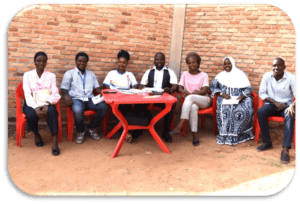
From July 6-9, 2025, Dhusamareb hosted Somalia’s most comprehensive durable solutions dialogue. The Government-to-Government (G2G) Learning Event brought together 86 participants from the Federal Government of Somalia, all Federal Member States – Jubaland, South West State, Galmudug, Puntland, Hirshabelle, and Banadir – alongside UN agencies, NGOs, civil society organizations, and displacement-affected communities.
This gathering, convened by the Swiss Development Cooperation (SDC), Regional Durable Solutions Secretariat (ReDSS), National Centre for Rural Development and Durable Solutions (NCRDS), and the Galmudug Ministry of Planning, Investment and Economic Development, demonstrated Somalia’s growing capacity to lead its own durable solutions agenda.
The event provided a platform for operationalizing newly established frameworks like the National Solutions Pathways Action Plan (NSPAP) and National Transformation Plan. With Somalia facing reduced international funding due to USAID cuts and shifting donor priorities, discussions focused on mobilizing domestic resources and leveraging private sector partnerships. The event demonstrated Somalia’s capacity to convene, facilitate, and lead complex multi-stakeholder processes. This institutional maturity, combined with growing technical expertise and sustained political will, positions the country to fully own its durable solutions agenda.
Daily Highlights
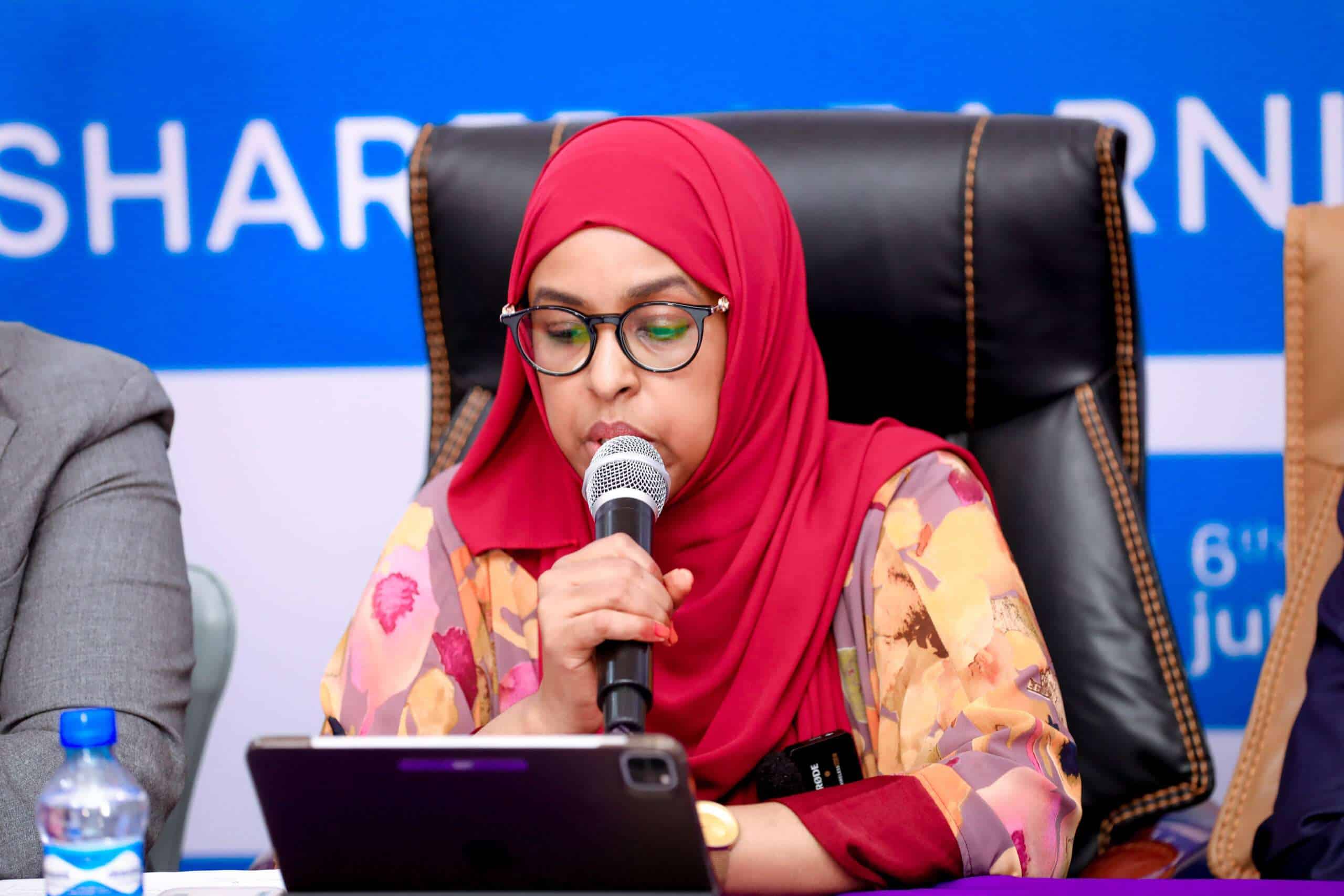
Ms. Zahra Abdi, Director of the National Center for Rural Development and Durable Solutions (NCRDS), makes her remarks during the opening panel.
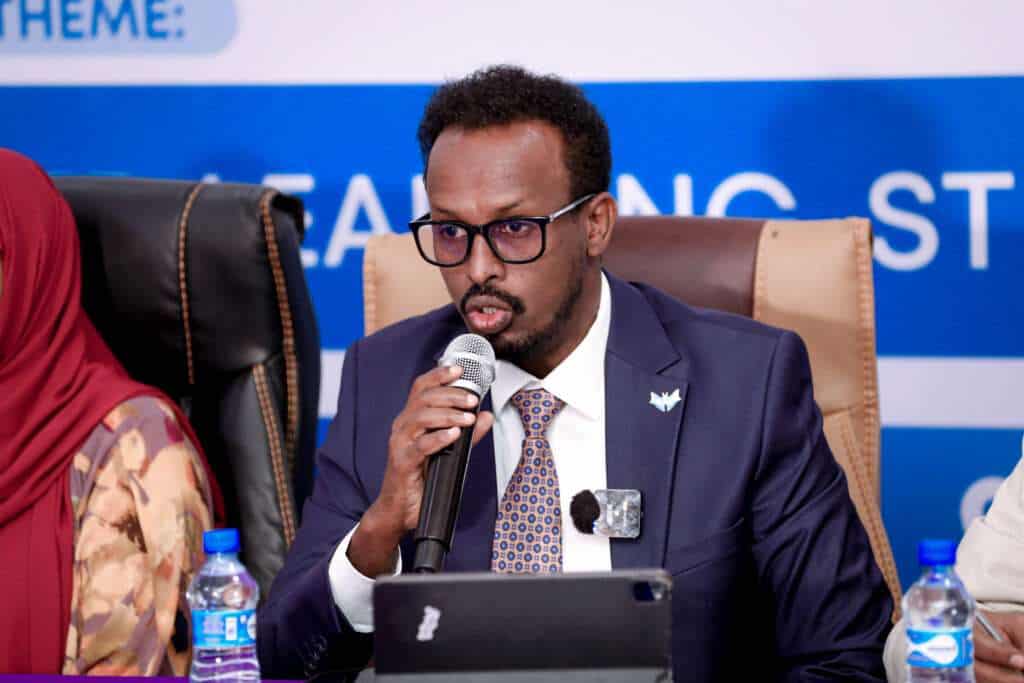
H.E Abdirahman Haile, Minister for MoPIED, Galmudug State, giving his remarks during the opening of the session.
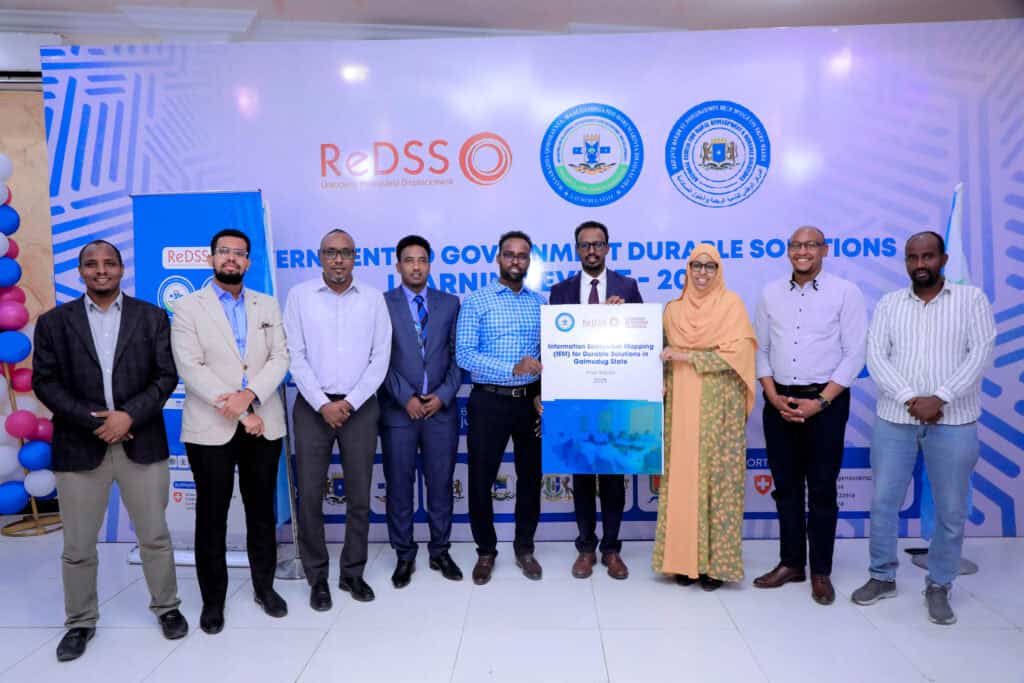
The Galmudug Durable Solutions Information Ecosystem 2025 is launched during the event
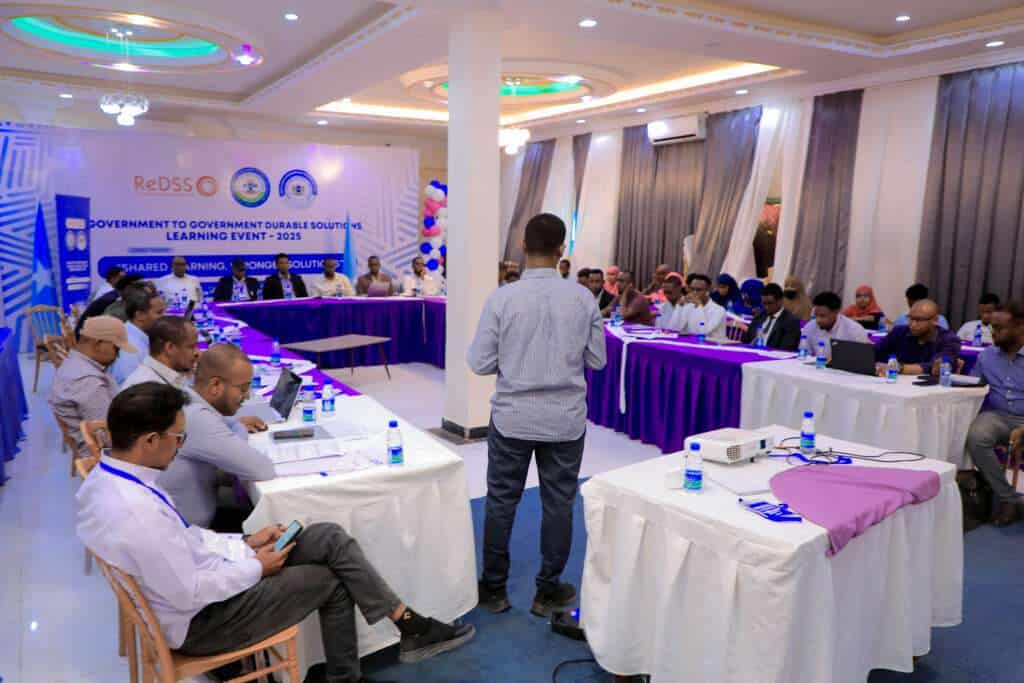
A cross-section of participants during the Government-to-Government Learning Event during a recap session
1. National Leadership Takes Center Stage
The Dhusamareeb G2G Learning Event marked a turning point in Somalia’s approach to durable solutions. The combination of strong political will, proven coordination tools, and shared roadmap creates opportunity to shift from short-term relief to long-term resilience. Hon. Abdirahman Haile, Minister of Planning for Galmudug, set the tone: “Galmudug is at the forefront of Somalia’s national efforts in durable solutions and reconciliation, ensuring that policies are translated into tangible actions that change lives.”
The Galmudug Government and NCRDS team effectively facilitated the four-day forum, showcasing Somalia’s institutional maturation and readiness to own its development agenda. While ReDSS provided platform and technical support, leadership remained firmly in the Somali government’s hands- reinforcing national ownership of the durable solutions agenda in line with the core principle of government-led and locally driven solutions. Participants reaffirmed that durable solutions are not side projects but must be central to Somalia’s national development agenda.
2. Coordination Structures Enhancing Delivery of Solutions
The second day of the event highlighted how Durable Solutions Units (DSUs) and Durable Solutions Technical Working Groups (DSTWGs) are enabling better coordination across different federal member states (FMS). Case studies demonstrated tangible achievements: construction of permanent and semi-permanent homes, legal land allocations with title deeds, and establishment of community feedback mechanisms. The consensus was clear – harmonized coordination tools like standard meeting templates, unified work plans, and shared reporting formats are essential to eliminate duplication, improve clarity, and strengthen accountability.
Participants agreed to adopt harmonized tools developed during the learning event, incorporating input from durable solutions directors across all states and the Banadir Regional Administration. This commitment to standardization reflects growing institutional maturity.
3. Data as a Strategic Foundation to Effective Action
The third day focused on data as the foundation for effective solutions. The Somali Public Agenda called for investments in housing, water, education, and security alongside grassroots participation mechanisms. The Somali National Bureau of Statistics announced plans to integrate IDP data into national surveys, enabling targeted interventions. A facilitated actor-mapping exercise revealed untapped potential in diaspora and private sector engagement, particularly in financing and technology provision. This shift toward domestic resource mobilization isn’t just about funding, but about sustainability and ownership.
4. Tools for Transformation
Day four demonstrated practical application as participants worked with harmonized coordination tools, finalizing Terms of Reference, work plans, and reporting formats for national DSTWG use.
Compelling case studies featured the BRCiS Consortium’s work in Dabare Village, SoDMA’s Early Warning and Early Action system, and the launch of the Galmudug Durable Solutions Information Ecosystem 2025. These examples illustrated how innovation happens at the intersection of policy and practice.
Confronting Implementation Challenges
Across different discussions over the duration of the event, there was an acknowledgement of the obstacles to effective delivery of solutions. Coordination across government levels remains fragmented, with unclear or overlapping mandates between federal and state institutions impeding coherent action. Durable solutions are often not fully integrated into sectoral and development planning, limiting sustainability and cross-sector impact.
Capacity gaps persist at sub-national levels, where local actors require additional training and resources to translate policies into practice. The meaningful inclusion of displacement-affected communities in decision-making processes remains insufficiently institutionalized, though the IDP bill under review promises stronger protections.
Additional challenges include limited access to reliable, disaggregated data for evidence-based planning, operational constraints due to insecurity and fragile governance in certain regions, and prevalence of short-term, fragmented funding streams that fall short of enabling the multi-sectoral, long-term investments durable solutions require.
Commitments for Progress
The learning event produced concrete outcomes and commitments:
- Standardize coordination structures across all government levels through unified Terms of Reference and planning templates
- Align local and national action with the NSPAP and National Transformation Plan
- Improve data use and strengthen accountability and monitoring systems
- Implement national rollout of training-of-trainers sessions
- Establish regular, structured platform for ongoing government-to-government learning
- Integrate the NSPAP into all sectoral and district development plans
- Accelerate finalization of the National Land Policy
- Adopt harmonized coordination tools nationwide
- Strengthen DSU/DSTWG capacities and establish clear reporting lines
- Actively engage private sector and diaspora actors in financing and implementation
The government requested that such learning events be held annually to sustain peer learning, strengthen coordination, and maintain momentum on the durable solutions agenda.
A Critical Opportunity
The Learning Event marked a turning point in Somalia’s approach to durable solutions. The combination of strong political will, proven coordination tools, and shared roadmap creates opportunity to shift from short-term relief to long-term resilience.
An opportunity and takeaway for the government actors was that Somalia’s durable solutions agenda must be anchored in strong policy foundations, with legal frameworks like the National Land Policy providing clarity and direction. Evidence-based planning is essential – integrating data at all levels improves targeting, enhances accountability, and strengthens results. Diversified financing, including mobilizing private sector investment and diaspora resources, is critical for long-term sustainability. Community inclusion remains non-negotiable: displacement-affected communities must be actively engaged in planning, implementation, and monitoring.
The central message that emerged from the entire event bears repeating: durable solutions are not the responsibility of a single institution or sector. They require sustained leadership, cross-government collaboration and with all stakeholders including private sector and diaspora, and active participation of displacement-affected communities.