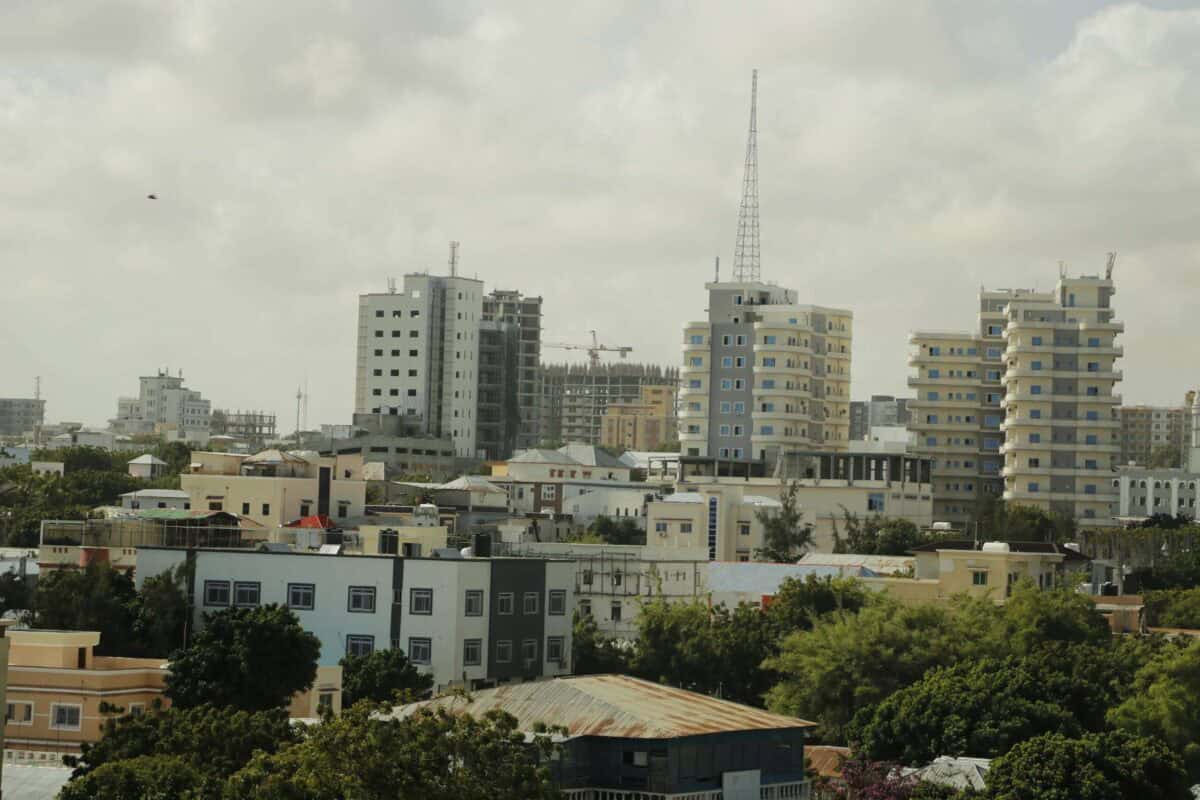

On May 14, 2025, stakeholders gathered at the Palms Hotel in Mogadishu for a critical conversation about Somalia’s displacement crisis. The Regional Durable Solutions Secretariat (ReDSS), working with the International Organization for Migration (IOM), convened 22 participants representing government officials, UN agencies, international NGOs, civil society organizations, IDP representatives, and the Somalia NGO Consortium.
The timing was strategic. Somalia had just launched its National Solutions Pathways Action Plan (NSPAP) in October 2024 – an ambitious framework targeting one million internally displaced persons for solutions pathways within two years. The workshop served as both reality check and strategic planning session, assessing progress and identifying the road ahead.
The Scale of the Challenge
Over 3.8 million Somalis are internally displaced. Many have lived in informal settlements for over three decades. This isn’t just a humanitarian crisis – it’s a development challenge that touches every aspect of Somalia’s future.
Zahra Abdi, Director General of the newly established National Centre for Rural Development and Durable Solutions (NCRDS), outlined what’s at stake. The NCRDS brings together durable solutions, resilience, and rural development under one strategic umbrella, operationalizing five core pathways: government leadership, access to services, livelihoods, legal documentation, and housing, land, and property justice. Recurrent forced evictions and lack of access to land and legal identity continue to hinder progress. With an estimated cost of $2.9 billion, the NSPAP provides a practical roadmap for addressing these long-standing challenges across Somalia.
What the Data Reveals
The workshop featured key findings from the first phase of the Durable Solutions Progress (DSP) Survey, conducted by the Ministry of Planning, Investment and Economic Development with IOM support. This comprehensive study covered 60% of Somalia’s IDP population across Banadir, South West State, and Jubaland.
The results painted a complex picture. Tenure security remains fragile, with high eviction risks in areas like Daynile and Baardheere, though locations such as Doolow and Baidoa demonstrate that better housing, land, and property conditions are achievable. Access to personal identification is extremely limited – documentation rates as low as 1-3% in places like Berdaale, Daynile, and Xudur. This lack of legal identity creates barriers across all aspects of life, from accessing services to securing employment and participating in civic processes. Family separation continues as a major issue, especially in Baardheere, while civic participation remains generally low across surveyed regions. Most IDPs rely on informal justice systems through elders and community leaders, with awareness and use of formal legal mechanisms remaining limited.
Yet encouraging signs emerged. Sixty-four percent of IDPs reported feeling integrated into their host communities, with the highest levels of social cohesion observed in Doolow, Kahda, and Kismaayo. This suggests that social integration – while not sufficient alone – provides a foundation upon which other durable solutions can be built.
Opportunities for Progress
Several opportunities crystallized during discussions. The alignment between the NSPAP and the National Transformation Plan provides a strong accountability framework that can be leveraged for coordinated action and joint resource mobilization. The establishment of the NCRDS offers a unique opportunity to integrate durable solutions, resilience, and rural development under one roof.
Political commitment at both national and federal member state levels provides momentum for policy reform and institutional strengthening. Climate resilience emerged as both challenge and opportunity, with potential to promote climate-smart agriculture in areas of origin and link early warning systems with durable solutions efforts. Stakeholders identified untapped potential in engaging the private sector and Somali diaspora more effectively, provided clear frameworks and incentives are in place. The development of a national land tenure policy and clarification of criteria for ending IDP status were emphasized as critical for long-term solutions.
Confronting Key Constraints
Frank discussions acknowledged persistent challenges that constrain progress. Data remains fragmented and often disconnected from monitoring and learning processes. There’s an urgent need to strengthen data systems and better link needs assessments with outcome tracking.
Budget limitations at the government level emerged as a major constraint. A resourcing and resource mobilization strategy is urgently needed, particularly given Somalia’s debt challenges. Rapid urbanization, political instability, and limited access in rural areas pose additional barriers. Inadequate community consultations and weak participation of displaced communities in decision-making processes undermine programming effectiveness. The workshop recommended strengthening community-level consultation platforms, increasing civil society engagement, and supporting district-based accountability forums.
Strategic Priorities That Work
Workshop discussions surfaced several strategic priorities. A whole-of-government approach shows promise when local authorities are engaged and civil society platforms facilitate government dialogue. However, disconnects between policymakers and communities, poor understanding of land and housing issues, and gaps in institutional capacity limit progress.
Bridging this gap requires inclusive design processes, stronger role definition, and community-level policy engagement. There’s growing interest in linking humanitarian response with recovery and private sector development. While policies exist, awareness and coordination around them remain weak. Moving forward, stakeholders should invest in skills development, enable access to start-up capital, improve land documentation, and promote climate-smart livelihoods. Building inclusive financial systems and fostering peacebuilding are equally important.
The Critical Role of Community Participation
Participation by IDPs and displacement-affected communities emerged as non-negotiable. Although IDP leadership structures exist and government shows openness to engagement, representation in decision-making remains limited. Strengthening displacement-affected community forums and ensuring their role in holding authorities accountable were key recommendations.
This participatory approach reflects broader understanding that durable solutions cannot be imposed from above. They must be co-designed with the communities they aim to serve, drawing on local knowledge, priorities, and capacities.
A Roadmap for Action
To advance durable solutions for displaced populations in Somalia, strategic actions must be prioritized:
- Establishing inclusive, multi-stakeholder consultation platforms to ensure coordinated planning among IDPs, government actors, NGOs, the private sector, and academia
- Clarifying government mandates through a harmonized whole-of-government framework to overcome institutional overlaps and improve coordination
- Addressing immediate needs of IDPs including access to basic services, land, shelter, and livelihoods
- Linking evidence from the DSP Survey with local-level joint analysis to support adaptive, community-led programming
- Investing in economic empowerment through vocational training and market-based livelihoods to build resilience and reduce aid dependency
- Embedding durable solutions efforts within Somalia’s broader national development plans and climate strategies
- Engaging the private sector and Somali diaspora through clear, incentivized mechanisms
- Institutionalizing regular reflection forums to foster shared learning, align strategies, and track progress
- Advancing a national legal and policy framework that defines conditions under which IDP status ends and ensures secure land tenure and access to legal documentation
Building on Strong Foundations
The second phase of the DSP Survey, scheduled for the third quarter of 2025, will extend evidence gathering to Puntland, Galmudug, and Hirshabelle. Led by the NCRDS, this expansion will provide a more complete picture of displacement dynamics across Somalia and inform more targeted interventions.
The workshop demonstrated that Somalia now has the institutional foundations needed to advance durable solutions. The NCRDS provides strategic coordination, the NSPAP offers a clear roadmap, and growing political commitment across federal and state levels creates momentum for sustained action.
The displacement crisis that has defined Somalia for decades need not define its future. With focused coordination and genuine community engagement, durable solutions for Somalia’s displaced communities are within reach.